

In the fast - paced world of data communication, 200G transceivers have emerged as a pivotal component, enabling high - speed data transmission across various networks. As a 200G Transceiver supplier, I often get asked about the price range of these crucial devices. This blog post aims to shed light on the factors influencing the price of 200G transceivers and provide an overview of the typical price range.
Factors Affecting the Price of 200G Transceivers
Technology and Performance
The underlying technology used in 200G transceivers significantly impacts their price. For instance, transceivers that employ advanced modulation techniques and high - quality components tend to be more expensive. These technologies allow for better signal integrity, longer transmission distances, and higher data rates, which are essential for demanding applications such as data centers and high - speed networks.
Transceivers with features like low power consumption and high reliability also come at a premium. In data centers, where energy efficiency is a top priority, low - power 200G transceivers can lead to substantial cost savings over time. However, the research and development required to achieve these features add to the overall cost of the product.
Transmission Distance
The distance over which a 200G transceiver can transmit data is another key factor in determining its price. Short - reach transceivers, such as the 200G QSFP56 SR4, are designed for use within a data center, typically for distances up to a few hundred meters. These transceivers use multimode fiber and are generally more affordable due to the lower cost of the fiber and the simpler technology required for short - distance transmission.
On the other hand, long - reach 200G transceivers, which can transmit data over tens or even hundreds of kilometers, are more expensive. They require more sophisticated optical components, such as high - power lasers and advanced receivers, to maintain signal quality over long distances.

Form Factor
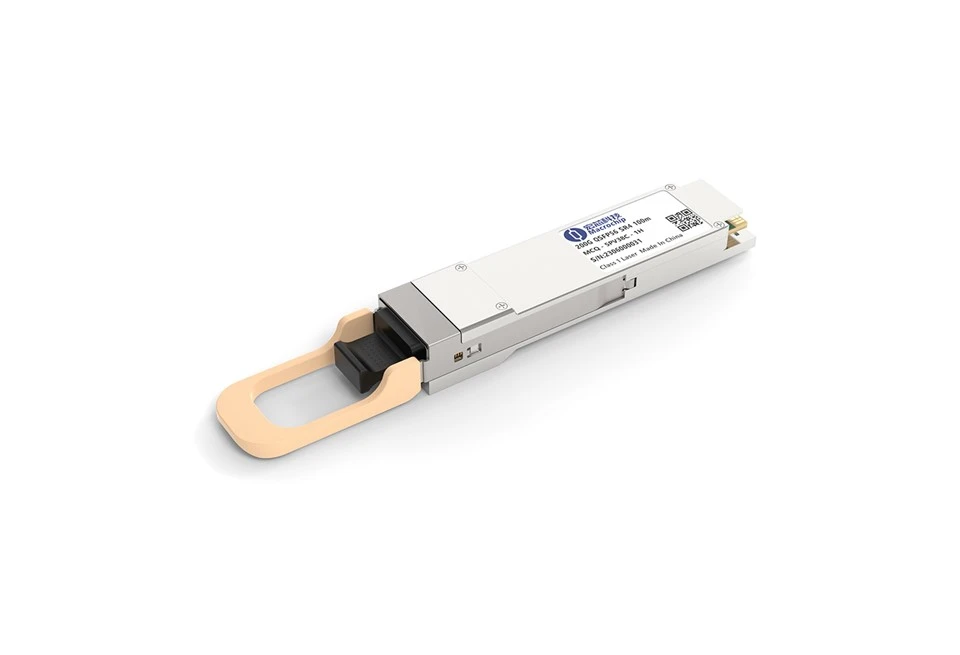
The form factor of a 200G transceiver also plays a role in its price. The QSFP56 200G is a popular form factor that offers high density and high - speed performance. It is widely used in data centers due to its compatibility with existing infrastructure. However, the cost of manufacturing QSFP56 transceivers can be relatively high, especially when compared to some other form factors.
Other form factors may offer different trade - offs in terms of size, power consumption, and performance. For example, some smaller form factors may be more suitable for space - constrained applications but may come at a higher cost per unit due to the challenges of miniaturization.
Brand and Quality
Well - established brands often command a higher price for their 200G transceivers. These brands have a reputation for quality, reliability, and excellent customer support. They invest heavily in research and development, manufacturing processes, and quality control to ensure that their products meet the highest standards.
However, there are also many reliable and cost - effective alternatives available from other suppliers. These suppliers may offer similar performance and quality at a lower price, making them an attractive option for budget - conscious customers.
Typical Price Range of 200G Transceivers
The price range of 200G transceivers can vary widely depending on the factors mentioned above. Generally, short - reach 200G transceivers, such as the 200G QSFP56 SR4, can range from a few hundred dollars to around a thousand dollars per unit. These transceivers are ideal for data center applications where short - distance, high - speed connectivity is required.
Long - reach 200G transceivers, on the other hand, can cost anywhere from a few thousand dollars to several thousand dollars per unit. The higher cost is due to the more advanced technology and components required for long - distance transmission.
When it comes to brand and quality, well - known brands may charge a premium of 20% to 50% more than their lesser - known counterparts. However, it's important to note that the price difference may not always translate into a significant difference in performance, especially for applications where the requirements are not extremely demanding.
Market Trends and Future Outlook
The market for 200G transceivers is constantly evolving, and prices are expected to change over time. As technology advances and economies of scale come into play, the cost of 200G transceivers is likely to decrease. This trend is driven by factors such as the increasing demand for high - speed data transmission, the development of more efficient manufacturing processes, and the competition among suppliers.
In addition, the emergence of new technologies, such as silicon photonics, may also have an impact on the price and performance of 200G transceivers. Silicon photonics has the potential to reduce the cost of manufacturing by leveraging existing semiconductor manufacturing processes.
Conclusion
As a 200G Transceiver supplier, I understand that price is an important consideration for our customers. However, it's crucial to look beyond the price tag and consider the overall value that a 200G transceiver can offer. Factors such as performance, reliability, and compatibility with existing infrastructure should also be taken into account when making a purchasing decision.
If you are in the market for 200G transceivers and would like to learn more about our products and pricing, we encourage you to contact us for a detailed quote. Our team of experts is ready to assist you in finding the right 200G transceiver solution for your specific needs.
References
- Industry reports on optical transceivers from market research firms.
- Technical papers on 200G transceiver technologies.