

Hey there! As a supplier of 200G QSFP56 LR4 transceivers, I often get asked about phase noise. So, let's dive right into what the phase noise of 200G QSFP56 LR4 is all about.
First off, what's phase noise? In simple terms, phase noise is the short - term fluctuations in the phase of a signal. It's like the jitter or instability in the timing of a signal wave. For high - speed optical transceivers like the 200G QSFP56 LR4, phase noise can have a big impact on performance.
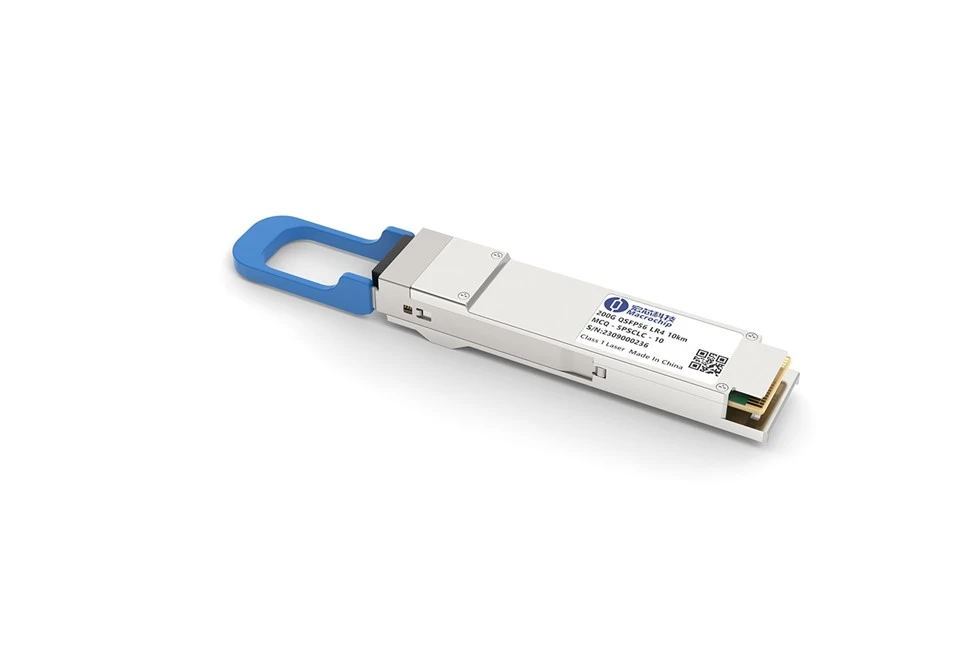
The 200G QSFP56 LR4 is a hot - shot in the data center and telecommunications world. It's designed to support high - speed data transmission over long distances. With the ever - increasing demand for faster and more reliable data transfer, the performance of these transceivers is crucial. And phase noise plays a key role in that performance.
When it comes to the 200G QSFP56 LR4, phase noise can affect the accuracy of the signal. A high level of phase noise can lead to errors in data detection at the receiving end. It can cause the signal to deviate from its ideal phase, making it harder for the receiver to distinguish between different data symbols. This can result in bit errors, which are a big no - no in high - speed data communication.
Let's talk about how phase noise is measured. Usually, it's expressed in dBc/Hz (decibels relative to the carrier per hertz). This measurement tells us how much noise power is present at a certain offset frequency from the carrier signal. For example, if we measure the phase noise at an offset of 10 kHz from the carrier, we can get an idea of how stable the signal is in that frequency range.
In the case of the 200G QSFP56 LR4, the goal is to keep the phase noise as low as possible. Manufacturers, like us, work hard to optimize the design of these transceivers to reduce phase noise. We use high - quality components and advanced manufacturing techniques to ensure that the oscillators and other signal - generating parts of the transceiver produce stable signals with minimal phase fluctuations.
One of the factors that can contribute to phase noise in the 200G QSFP56 LR4 is the oscillator itself. The oscillator is responsible for generating the clock signal that synchronizes the data transmission. If the oscillator is not stable, it can introduce phase noise into the system. That's why we invest in high - precision oscillators that are less prone to temperature changes, vibrations, and other external factors that can cause instability.
Another factor is the electrical and optical components within the transceiver. Any non - linearities in these components can also lead to phase noise. For example, if the modulator or amplifier in the transceiver has non - linear characteristics, it can distort the signal and increase phase noise. So, we carefully select and test these components to make sure they meet our strict quality standards.

Now, let's take a look at how phase noise compares to other performance metrics of the 200G QSFP56 LR4. While phase noise is important, it's not the only thing that matters. Other metrics like insertion loss, return loss, and bit error rate also play a crucial role in determining the overall performance of the transceiver.
Insertion loss refers to the amount of signal power that is lost as the signal passes through the transceiver. A high insertion loss can reduce the strength of the signal, making it more difficult to detect accurately. Return loss, on the other hand, measures the amount of signal that is reflected back from the transceiver. A high return loss can cause interference and affect the signal quality.
Bit error rate (BER) is a measure of the number of bit errors that occur during data transmission. A low BER is essential for reliable data communication. Phase noise can contribute to an increase in BER, as we mentioned earlier. So, when we're designing and testing the 200G QSFP56 LR4, we need to consider all these factors together to ensure optimal performance.
As a supplier of 200G QSFP56 LR4 transceivers, we understand the importance of phase noise and its impact on performance. We're constantly researching and developing new technologies to further reduce phase noise and improve the overall quality of our products.
If you're in the market for high - quality 200G QSFP56 LR4 transceivers, you might be interested in learning more about our products. You can check out our 200G QSFP56 LR4 page for detailed specifications and features. We also have information about our QSFP LR4 and 200G QSFP products, which are also great options for high - speed data transmission.
We're always happy to discuss your specific requirements and help you find the right solution for your needs. Whether you're building a new data center or upgrading an existing network, our team of experts can provide you with the support and guidance you need. So, don't hesitate to reach out to us if you're interested in purchasing our 200G QSFP56 LR4 transceivers. We look forward to the opportunity to work with you and help you achieve your data transmission goals.
References:
- "High - Speed Optical Transceiver Design and Performance Analysis"
- "Phase Noise in Communication Systems: Theory and Applications"