

Dispersion tolerance is a critical parameter in the field of optical communication, especially when it comes to high - speed optical transceivers like the 400G OSFP DR4+. As a supplier of 400G OSFP DR4+ products, I am well - versed in the significance and details of dispersion tolerance for these advanced optical modules.
Understanding Dispersion in Optical Communication
Dispersion refers to the phenomenon where different components of an optical signal travel at different speeds, causing the signal to spread out over time as it propagates through an optical fiber. There are mainly two types of dispersion: chromatic dispersion (CD) and polarization - mode dispersion (PMD).
Chromatic dispersion occurs because the refractive index of the optical fiber varies with the wavelength of light. Different wavelengths in a multi - wavelength optical signal will travel at different speeds, leading to a broadening of the signal pulses. Polarization - mode dispersion, on the other hand, is caused by the fact that the two orthogonal polarization modes in a single - mode fiber can have different propagation velocities, which also results in signal distortion.
Dispersion Tolerance of 400G OSFP DR4+
The 400G OSFP DR4+ is a high - speed optical transceiver designed for short - reach data center interconnects. When it comes to dispersion tolerance, the transceiver needs to be able to tolerate a certain amount of dispersion without significant degradation of the signal quality.
For chromatic dispersion tolerance, the 400G OSFP DR4+ typically has a relatively high tolerance within its designed reach. In short - reach applications, the chromatic dispersion is usually not a major limiting factor. However, as the transmission distance increases, even a small amount of chromatic dispersion can cause inter - symbol interference (ISI), which degrades the bit - error rate (BER) of the system. The 400G OSFP DR4+ is engineered to handle chromatic dispersion within a range that is suitable for its intended short - reach applications, usually up to a few kilometers.
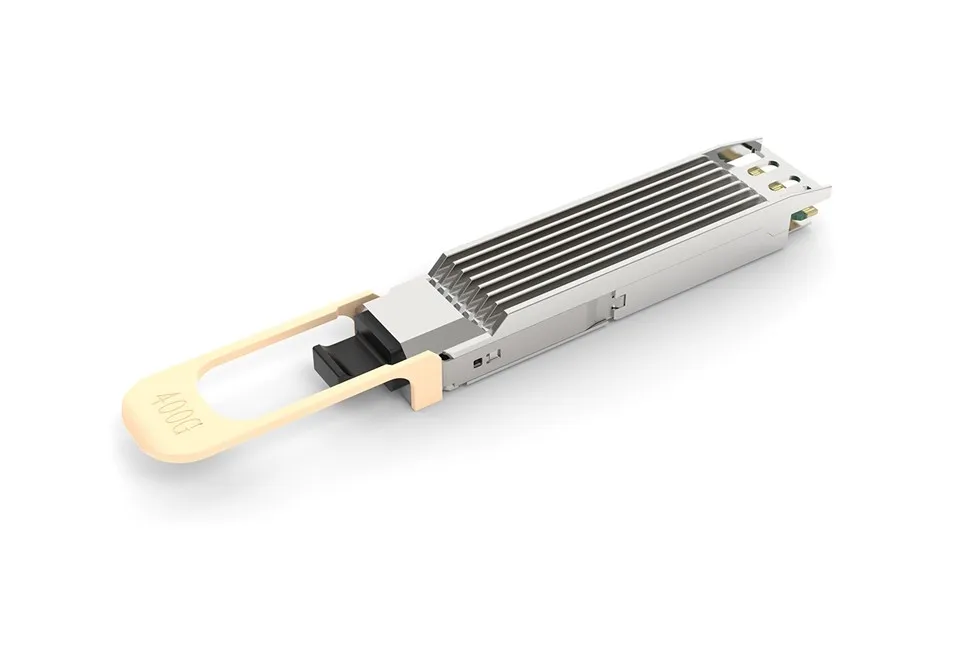

Regarding polarization - mode dispersion, the 400G OSFP DR4+ also has a certain level of tolerance. PMD can cause random fluctuations in the signal polarization, which can lead to signal fading and increased BER. The design of the 400G OSFP DR4+ takes into account the potential effects of PMD and incorporates techniques to mitigate its impact. This allows the transceiver to maintain stable performance in real - world optical fiber environments where PMD may be present.
Factors Affecting Dispersion Tolerance
Several factors can affect the dispersion tolerance of the 400G OSFP DR4+. The first is the quality of the optical fiber. Different types of optical fibers have different dispersion characteristics. For example, single - mode fibers with lower dispersion coefficients will result in less signal dispersion, allowing the transceiver to operate more reliably over longer distances.
The transmission rate also plays a crucial role. As the data rate increases to 400G, the signal pulses become narrower, making them more susceptible to dispersion. Therefore, the 400G OSFP DR4+ needs to be carefully designed to handle the high - speed signals while maintaining an acceptable level of dispersion tolerance.
Environmental factors such as temperature and mechanical stress can also affect the dispersion characteristics of the optical fiber and, consequently, the dispersion tolerance of the transceiver. Temperature changes can cause the refractive index of the fiber to vary, which in turn affects chromatic dispersion. Mechanical stress, such as bending or twisting of the fiber, can introduce additional PMD.
Importance of Dispersion Tolerance in 400G OSFP DR4+ Applications
In data center applications, the 400G OSFP DR4+ is widely used for interconnecting servers, switches, and storage systems. High dispersion tolerance is essential for ensuring reliable and high - performance data transmission.
Reliable data transmission is crucial for maintaining the integrity of the data center operations. Any signal degradation due to dispersion can lead to data errors, which may result in system failures, data loss, or reduced network efficiency. With a high - dispersion - tolerant 400G OSFP DR4+, data centers can operate more stably, reducing the need for frequent system reconfigurations and maintenance.
Moreover, as data centers continue to grow in size and complexity, the demand for higher - speed and longer - reach interconnects is increasing. A 400G OSFP DR4+ with good dispersion tolerance can support these evolving requirements, enabling data centers to scale up their operations without significant investment in new fiber infrastructure.
Technologies Used to Improve Dispersion Tolerance
To improve the dispersion tolerance of the 400G OSFP DR4+, several advanced technologies are employed.
One of the key technologies is digital signal processing (DSP). DSP algorithms can be used to compensate for the effects of dispersion in the electrical domain. By analyzing the received signal and applying appropriate equalization techniques, DSP can effectively reduce the ISI caused by dispersion, improving the signal quality and BER.
Another technology is forward error correction (FEC). FEC adds redundant information to the transmitted data, allowing the receiver to detect and correct errors caused by dispersion and other impairments. This helps to improve the overall reliability of the transmission and increases the effective dispersion tolerance of the system.
Comparison with Other Optical Modules
Compared with other optical modules, such as the OSFP Optical Module with different transmission rates or form factors, the 400G OSFP DR4+ has unique dispersion tolerance characteristics.
Lower - speed optical modules may have a relatively higher tolerance to dispersion because the signal pulses are wider, and the impact of dispersion is less significant. However, they cannot meet the high - speed data transmission requirements of modern data centers. On the other hand, some long - reach optical modules may be designed to have even higher dispersion tolerance, but they usually come with higher power consumption and cost.
The 400G OSFP DR4+ strikes a balance between high - speed data transmission and dispersion tolerance, making it an ideal choice for short - reach data center applications. It provides a cost - effective and energy - efficient solution for interconnecting high - speed devices within the data center.
Conclusion
As a supplier of 400G OSFP DR4+ products, I understand the critical role that dispersion tolerance plays in the performance of these optical transceivers. The 400G OSFP DR4+ is designed to have a sufficient dispersion tolerance to meet the requirements of short - reach data center applications.
The combination of advanced technologies such as DSP and FEC helps to improve the dispersion tolerance and ensure reliable data transmission. With the continuous development of data center technology, the demand for high - performance optical transceivers like the 400G OSFP DR4+ will only increase.
If you are interested in our 400G OSFP DR4+ products or other 400G Transceiver and Optical Module 400G offerings, we invite you to contact us for procurement and further technical discussions. Our team of experts is ready to provide you with detailed product information and customized solutions to meet your specific needs.
References
- "Optical Fiber Communication Technology" by Gerd Keiser
- "High - Speed Optical Communication Systems" by Andrew Ellis