

In the ever - evolving landscape of data communication, the demand for high - speed, reliable, and efficient optical transceivers is skyrocketing. As a leading supplier of 400G QSFP - DD LR4 optical transceivers, I am excited to share with you the latest technological developments in this field.
1. Overview of 400G QSFP - DD LR4
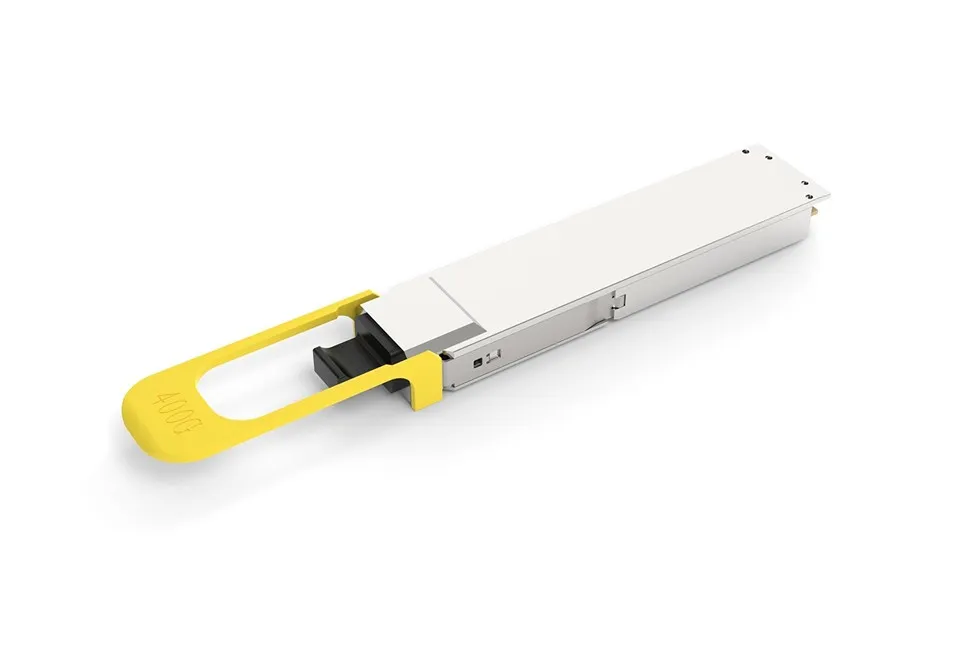
The 400G QSFP - DD LR4 is a key player in the 400 Gigabit Ethernet market. It is designed to support long - reach transmission over single - mode fiber (SMF) up to 10 kilometers. The QSFP - DD (Quad Small Form - factor Pluggable Double Density) form factor offers high port density, making it ideal for data centers, high - performance computing, and telecommunications networks.
The LR4 in its name indicates that it uses a 4 - lane parallel optical interface with each lane operating at approximately 100Gbps, multiplexed into a single fiber using wavelength - division multiplexing (WDM) technology. This allows for high - speed data transmission while minimizing the number of fibers required.
2. Latest Technological Advancements
2.1 Higher Integration and Miniaturization
One of the most significant developments in 400G QSFP - DD LR4 technology is the trend towards higher integration and miniaturization. Manufacturers are now able to pack more functionality into a smaller form factor. This is achieved through the use of advanced semiconductor manufacturing processes and the integration of multiple components onto a single chip.
For example, the latest 400G QSFP - DD LR4 modules feature integrated photonic integrated circuits (PICs). These PICs combine multiple optical functions such as lasers, modulators, and detectors on a single chip, reducing the size and power consumption of the module. This not only makes the modules more compact but also improves their reliability by reducing the number of interconnects and potential failure points.
2.2 Improved Power Efficiency
Power consumption is a major concern in data centers, as high - power devices can lead to increased operating costs and cooling requirements. The latest 400G QSFP - DD LR4 modules have made significant strides in improving power efficiency.
Newer designs use more energy - efficient lasers and modulators, as well as advanced power management techniques. For instance, some modules incorporate dynamic power adjustment features that can optimize power consumption based on the actual data traffic. This means that the module consumes less power during periods of low traffic, resulting in overall energy savings.
2.3 Enhanced Signal Integrity
Maintaining signal integrity is crucial for high - speed data transmission. With the increase in data rates to 400Gbps, ensuring a clean and reliable signal has become even more challenging.
The latest 400G QSFP - DD LR4 modules use advanced equalization and forward error correction (FEC) techniques to enhance signal integrity. Equalization helps to compensate for signal degradation caused by factors such as fiber attenuation and dispersion, while FEC can detect and correct errors in the transmitted data. This results in a more reliable and error - free data transmission, even over long distances.
2.4 Compatibility and Interoperability
In a multi - vendor environment, compatibility and interoperability are essential. The latest 400G QSFP - DD LR4 modules are designed to be compliant with industry standards such as the IEEE 802.3bs for 400 Gigabit Ethernet and the MSA (Multi - Source Agreement) for QSFP - DD.
This ensures that the modules can be used interchangeably with other compliant devices from different manufacturers. Additionally, some modules support auto - negotiation features, which allow them to automatically detect and configure the optimal operating parameters when connected to different network equipment.
3. Comparison with Other 400G Optical Transceivers
3.1 400G OSFP DR4
The 400G OSFP DR4 is another popular 400G optical transceiver. While both the 400G QSFP - DD LR4 and 400G OSFP DR4 support 400Gbps data rates, they have some differences.
The 400G OSFP DR4 is designed for short - reach applications over multimode fiber (MMF) up to 500 meters, while the 400G QSFP - DD LR4 is for long - reach applications over SMF up to 10 kilometers. The OSFP (Octal Small Form - factor Pluggable) form factor is larger than the QSFP - DD, which may limit its port density in some applications. However, the OSFP form factor also allows for better heat dissipation, which can be beneficial in high - power applications.
3.2 QSFP DD SR8
The QSFP DD SR8 is also a 400G optical transceiver. It uses 8 - lane parallel optical interfaces for short - reach applications over MMF up to 100 meters.
Compared to the 400G QSFP - DD LR4, the QSFP DD SR8 does not use WDM technology. Instead, it relies on parallel optical transmission over multiple fibers. This makes it more suitable for short - distance, high - density applications where the cost of multiple fibers is not a major concern.

4. Applications of 400G QSFP - DD LR4
4.1 Data Centers
Data centers are the primary market for 400G QSFP - DD LR4 modules. With the exponential growth of data traffic, data centers need high - speed interconnects to support the transfer of large amounts of data between servers, storage systems, and network switches.
The long - reach capability of the 400G QSFP - DD LR4 allows for the connection of different racks and buildings within a data center campus, reducing the need for costly fiber infrastructure upgrades. The high port density and power efficiency of the modules also make them ideal for use in high - density blade servers and top - of - rack switches.
4.2 Telecommunications Networks
In telecommunications networks, the 400G QSFP - DD LR4 can be used for long - haul transmission between central offices, data centers, and mobile base stations. It enables service providers to increase the capacity of their networks without having to lay additional fiber cables.
The compatibility and interoperability of the modules also make them easy to integrate into existing network infrastructure, allowing for a smooth upgrade path to higher data rates.
5. Future Outlook
The future of 400G QSFP - DD LR4 technology looks promising. As the demand for higher data rates continues to grow, we can expect to see further improvements in performance, power efficiency, and integration.
One area of potential development is the use of new materials and technologies to further reduce the cost of manufacturing. For example, the use of silicon photonics may enable the mass - production of low - cost 400G QSFP - DD LR4 modules.
Another trend is the integration of artificial intelligence (AI) and machine learning (ML) techniques into the modules. These technologies can be used for real - time monitoring and optimization of the module's performance, such as adjusting the power consumption and equalization settings based on the network conditions.
6. Contact for Procurement
If you are interested in our 400G QSFP - DD LR4 products or have any questions about the latest technological developments, we welcome you to contact us for procurement and further discussions. Our team of experts is ready to provide you with detailed product information and technical support.
References
- IEEE 802.3bs Standard for Ethernet, Institute of Electrical and Electronics Engineers.
- QSFP - DD MSA (Multi - Source Agreement) documentation.
- Industry reports on optical transceiver technology trends.