

Hey there! As a supplier of QDD 400G SR8, I often get asked if the QDD 400G SR8 supports digital diagnostic monitoring. So, I thought I'd write this blog to clear up any confusion and give you all the deets.
First off, let's talk a bit about what digital diagnostic monitoring (DDM) is. DDM is a feature that allows you to monitor various parameters of an optical transceiver in real - time. These parameters include things like temperature, voltage, laser bias current, and optical output power. Having DDM is super useful as it helps you keep an eye on the health of your optical transceivers. You can detect early signs of potential issues, like overheating or power fluctuations, and take preventive measures before it leads to a complete failure.
Now, back to the main question: Does QDD 400G SR8 support digital diagnostic monitoring? The answer is a big yes! Our QDD 400G SR8 transceivers come fully equipped with DDM capabilities. This means that you can easily integrate them into your existing network management systems and start monitoring all the important parameters right away.
With the DDM feature in our QDD 400G SR8, you can access detailed information about the transceiver's operation. For example, the temperature monitoring can tell you if the device is getting too hot. If the temperature goes beyond the normal range, it could indicate a problem with the cooling system or excessive power consumption. By catching this early, you can avoid any damage to the transceiver and ensure its long - term reliability.

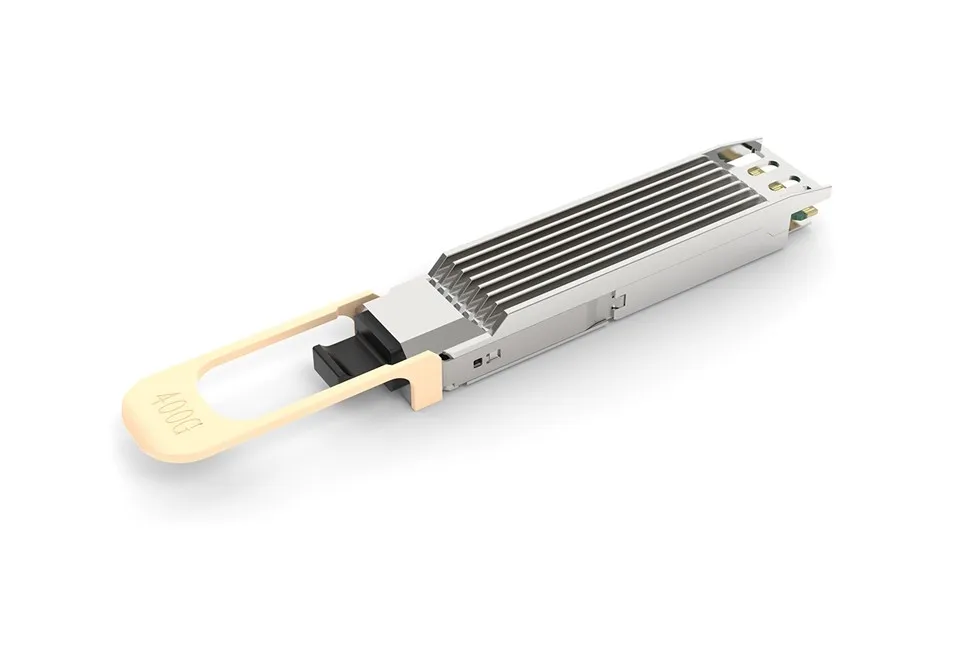
The voltage monitoring is also crucial. A stable voltage supply is necessary for the proper functioning of the transceiver. If there are voltage fluctuations, it can affect the performance of the laser and other components. With DDM, you can quickly identify if there are any voltage issues and take steps to correct them.
The laser bias current and optical output power are two other key parameters. The laser bias current is what keeps the laser diode operating at the right level. If the bias current is too high or too low, it can affect the quality of the transmitted signal. The optical output power indicates how strong the optical signal is. By monitoring these parameters, you can ensure that the QDD 400G SR8 is transmitting and receiving data accurately.
Why should you choose our QDD 400G SR8 with DDM? Well, there are several advantages. Firstly, it helps you save on maintenance costs. As I mentioned earlier, being able to detect potential issues early means you can avoid costly repairs or replacements. You can also plan your maintenance schedule more effectively based on the real - time data from the DDM.
Secondly, it improves network reliability. By keeping a close eye on the transceiver's health, you can prevent unexpected outages. In today's digital world, where every second of downtime can cost a lot, having a reliable network is essential.
Our QDD 400G SR8 is also highly compatible with different network environments. Whether you're running a small - scale data center or a large - scale enterprise network, it can fit right in. And because it supports DDM, you can manage it along with other optical transceivers in your network easily.
If you're in the market for other types of optical transceivers, we've got you covered too. We also offer Data Center Optical Transceiver, 400G FR4, and Optical Module 400G. These products also have great performance and can be integrated with your network infrastructure.
So, if you're interested in our QDD 400G SR8 or any of our other optical transceivers, don't hesitate to reach out to us for a purchase negotiation. We're here to provide you with the best products and services to meet your network needs.
References:
- Industry knowledge and experience in the optical transceiver field.
- Technical specifications of QDD 400G SR8 transceivers.