

In the fast - evolving landscape of high - speed data transmission, the 400G QSFP112 FR4 optical transceiver has emerged as a crucial component. As a reliable supplier of 400G QSFP112 FR4 products, I am often asked about various technical aspects of this transceiver, and one question that frequently comes up is: What is the rise time of 400G QSFP112 FR4?
Understanding the Basics of 400G QSFP112 FR4
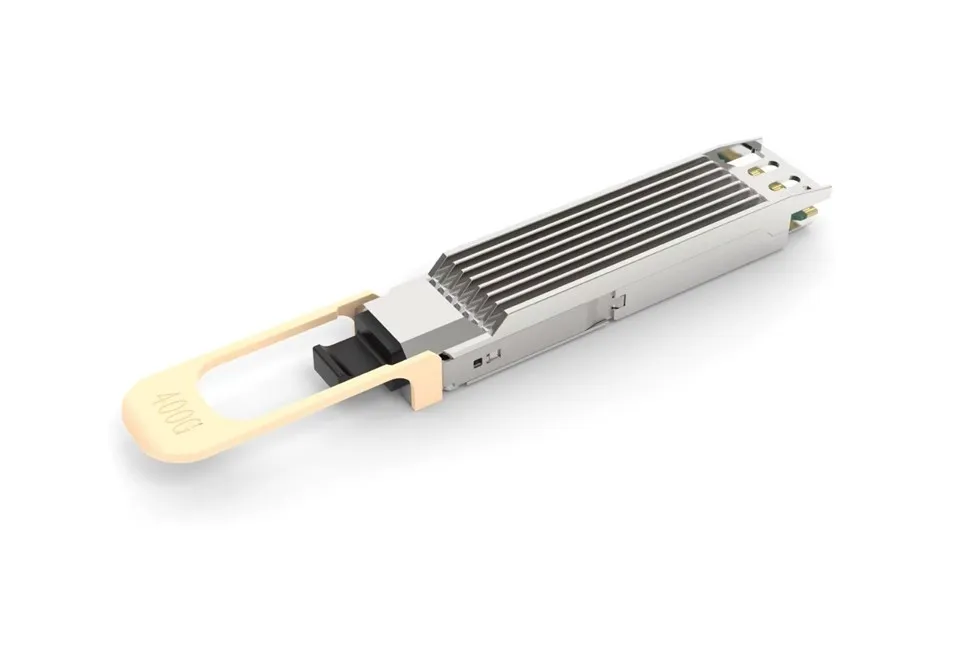
Before delving into the rise time, let's first understand what the 400G QSFP112 FR4 is. The 400G QSFP112 FR4 is a high - speed optical transceiver designed for data center and telecommunications applications. It operates at a data rate of 400 Gigabits per second (Gbps), enabling rapid data transfer over short - to medium - range distances. The "QSFP112" refers to the form factor, which is a quad small form - factor pluggable (QSFP) module with a 112 Gigabaud signaling rate. The "FR4" indicates that it is suitable for a fiber reach of up to 2 kilometers using single - mode fiber (SMF).
This transceiver is highly sought after in modern data centers due to its ability to handle large amounts of data traffic efficiently. It is commonly used in applications such as high - performance computing, cloud computing, and enterprise networking. Compared to other 400G optical transceivers like 400G DR4 and QSFP DD SR8, the 400G QSFP112 FR4 offers a good balance between data rate, reach, and cost.
What is Rise Time?
Rise time is a fundamental electrical parameter in the field of high - speed data transmission. It is defined as the time it takes for a signal to change from a specified low value (usually 10% of the signal's final amplitude) to a specified high value (usually 90% of the signal's final amplitude). In the context of the 400G QSFP112 FR4, the rise time is a critical metric because it directly affects the signal integrity and the overall performance of the transceiver.
A shorter rise time generally indicates a faster - changing signal, which is desirable for high - speed data transmission. However, achieving a very short rise time can be challenging due to various factors such as the electrical characteristics of the transceiver's components, the impedance matching of the transmission line, and the presence of noise and interference.
Factors Affecting the Rise Time of 400G QSFP112 FR4
1. Transmitter Design
The design of the transmitter in the 400G QSFP112 FR4 plays a significant role in determining the rise time. The transmitter typically consists of a laser diode or a vertical - cavity surface - emitting laser (VCSEL) and associated driver circuits. The speed and efficiency of the driver circuits can affect how quickly the laser can be modulated to generate the desired optical signal. For example, a high - speed driver with low parasitic capacitance and inductance can help reduce the rise time of the optical signal.
2. Fiber Characteristics
The characteristics of the single - mode fiber used with the 400G QSFP112 FR4 can also impact the rise time. Factors such as fiber dispersion, attenuation, and modal noise can cause the optical signal to spread out in time, effectively increasing the rise time. To mitigate these effects, high - quality single - mode fiber with low dispersion and attenuation should be used. Additionally, proper fiber installation and management are essential to ensure optimal signal transmission.
3. Receiver Design
The receiver in the 400G QSFP112 FR4 is responsible for detecting the optical signal and converting it back into an electrical signal. The design of the receiver, including the photodetector and the associated amplifier circuits, can affect the rise time of the electrical output signal. A fast - response photodetector with low noise and high sensitivity can help preserve the rise time of the received optical signal.
Measuring the Rise Time of 400G QSFP112 FR4
Measuring the rise time of the 400G QSFP112 FR4 requires specialized test equipment. A high - speed oscilloscope is commonly used to capture the electrical or optical signal and measure its rise time. The test setup typically involves connecting the transceiver to a test board or a network analyzer and applying a known input signal. The output signal is then measured using the oscilloscope, and the rise time is calculated based on the 10% - 90% amplitude criteria.
It is important to note that the measured rise time may vary depending on the test conditions, such as the temperature, the input signal amplitude, and the length of the fiber. Therefore, it is necessary to follow standardized test procedures to ensure accurate and reproducible measurements.
Typical Rise Time Values for 400G QSFP112 FR4
The typical rise time values for 400G QSFP112 FR4 transceivers are in the range of a few picoseconds to tens of picoseconds. However, these values can vary depending on the specific design and manufacturing process of the transceiver. As a supplier, we conduct rigorous testing on our 400G QSFP112 FR4 products to ensure that they meet or exceed the industry standards for rise time and other performance parameters.
Importance of Rise Time in 400G QSFP112 FR4 Applications
The rise time of the 400G QSFP112 FR4 has a direct impact on its performance in various applications. In high - speed data transmission systems, a shorter rise time allows for more accurate and reliable data transfer. It reduces the probability of inter - symbol interference (ISI), which occurs when the symbols in a digital signal overlap in time, leading to errors in data reception.
In addition, a shorter rise time can improve the overall bandwidth utilization of the transmission system. It enables higher data rates to be achieved without sacrificing signal integrity. This is particularly important in data centers where there is a constant need to increase the data transfer capacity to meet the growing demand for cloud services, big data analytics, and other data - intensive applications.
Our Offerings as a 400G QSFP112 FR4 Supplier
As a leading supplier of Optical Module 400G, including the 400G QSFP112 FR4, we are committed to providing high - quality products with excellent performance. Our 400G QSFP112 FR4 transceivers are designed and manufactured using the latest technologies and strict quality control processes.
We offer a wide range of 400G QSFP112 FR4 products to meet the diverse needs of our customers. Whether you are building a new data center, upgrading an existing network, or conducting research and development in the field of high - speed data transmission, our products can provide you with reliable and efficient solutions.
Contact Us for Procurement
If you are interested in purchasing 400G QSFP112 FR4 transceivers or have any questions about our products, please feel free to contact us. Our team of experts is ready to assist you with your procurement needs and provide you with detailed technical support. We look forward to working with you to meet your high - speed data transmission requirements.

References
- "High - Speed Optical Communication Systems" by John M. Senior.
- Industry standards documents related to 400G optical transceivers.
- Technical whitepapers from leading optical transceiver manufacturers.