

In the high - speed data transmission field, the 800G OSFP SR8 optical module has emerged as a crucial component, driving the evolution of data centers and high - performance computing environments. As a reliable 800G OSFP SR8 supplier, I am delighted to share in - depth knowledge about its packaging form.
Understanding the Basics of 800G OSFP SR8
Before delving into the packaging form, it is essential to understand what 800G OSFP SR8 is. The "800G" indicates its high - speed data transmission capacity of 800 gigabits per second. "OSFP" stands for Octal Small Form - factor Pluggable, which is a standardized form factor designed for high - density, high - speed optical and electrical interconnects. "SR8" refers to Short - Reach 8 - lane, suggesting that it is optimized for short - distance transmissions, typically within data centers.
The 800G OSFP SR8 is a cutting - edge technology that meets the increasing demand for high - bandwidth connections. It enables seamless communication between servers, switches, and other network devices, facilitating the rapid transfer of large amounts of data.
The Packaging Form of 800G OSFP SR8
Physical Dimensions
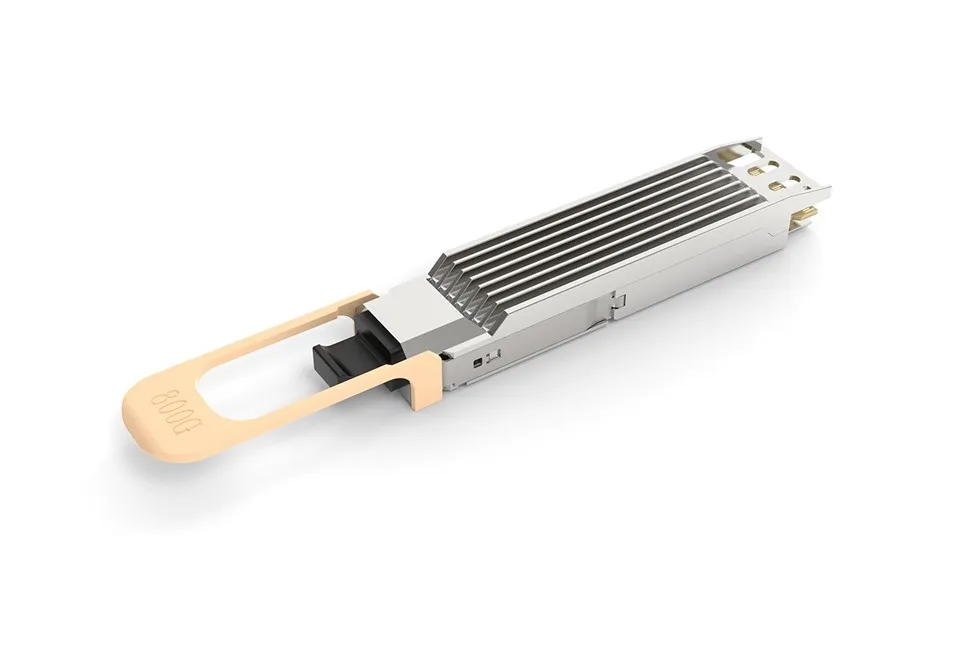
The OSFP form factor has specific physical dimensions that ensure compatibility and ease of installation. The 800G OSFP SR8 module is designed to fit into standard OSFP cages. It has a relatively compact size, which is crucial for high - density deployments in data centers. The overall length, width, and height are carefully engineered to allow multiple modules to be installed side by side in a limited space. This compactness not only saves valuable rack space but also simplifies cable management.
Connector and Interface
One of the key aspects of the packaging form is the connector and interface. The 800G OSFP SR8 typically uses a high - speed electrical interface to connect to the host device. The electrical pins are precisely arranged to ensure reliable signal transmission. On the optical side, it often uses multi - fiber push - on (MPO) connectors. The MPO connector is a high - density connector that can support multiple optical fibers in a single interface. In the case of SR8, it usually has 8 optical lanes, which are used for parallel data transmission. This design allows for high - speed data transfer over short distances, making it ideal for data center intra - rack connections.
Housing and Protection
The housing of the 800G OSFP SR8 module is designed to provide mechanical protection and electromagnetic shielding. It is typically made of a durable plastic or metal material that can withstand the rigors of handling and installation. The housing also helps to prevent electromagnetic interference (EMI) from affecting the performance of the module. Inside the housing, there are internal components such as lasers, photodetectors, and signal processing chips. These components are carefully arranged and protected to ensure stable operation.
Thermal Management
Given the high - speed operation of the 800G OSFP SR8, thermal management is a critical consideration in its packaging form. The module generates heat during operation, and if not properly managed, it can lead to performance degradation or even component failure. To address this issue, the packaging form often includes heat sinks or other thermal dissipation mechanisms. These heat sinks are designed to efficiently transfer heat away from the internal components to the surrounding environment. Some modules may also have built - in fans or other active cooling solutions for more demanding applications.
Advantages of the 800G OSFP SR8 Packaging Form
High - Density Deployment
The compact size of the OSFP form factor allows for high - density deployment in data centers. Multiple 800G OSFP SR8 modules can be installed in a single rack unit, increasing the overall bandwidth capacity of the network. This is particularly important as data centers continue to grow in size and complexity, and the demand for high - speed connections continues to rise.
Compatibility
The OSFP form factor is a standardized form factor, which means that the 800G OSFP SR8 modules are compatible with a wide range of host devices. This compatibility simplifies the installation and integration process, reducing the time and cost associated with network upgrades. Whether it is a new data center build or an existing network upgrade, the 800G OSFP SR8 can be easily incorporated into the infrastructure.
Ease of Installation and Maintenance
The plug - and - play nature of the 800G OSFP SR8 module makes it easy to install and remove. This is beneficial for both initial deployment and ongoing maintenance. In the event of a module failure, it can be quickly replaced without disrupting the entire network. The clear labeling and standardized interfaces also make it easier for technicians to identify and troubleshoot issues.
Comparison with Other 800G Form Factors
800G OSFP DR8+
The 800G OSFP DR8+ is another 800G optical module in the OSFP form factor. While both the 800G OSFP SR8 and 800G OSFP DR8+ share the same OSFP form factor, they are designed for different applications. The SR8 is optimized for short - reach applications, typically within a few hundred meters, while the DR8+ is designed for longer - reach applications, up to several kilometers. The packaging form of the DR8+ may have some differences in terms of the optical components and the thermal management requirements to support the longer - distance transmission.
Other 800G Form Factors
There are also other 800G form factors available in the market, such as the CFP8. Compared to these other form factors, the OSFP form factor offers better high - density deployment capabilities. The 800G OSFP SR8's compact size and standardized design make it a more attractive option for data center operators who need to maximize their network capacity in a limited space.
Applications of 800G OSFP SR8
The 800G OSFP SR8 is widely used in various applications, especially in data centers. It is commonly used for server - to - switch connections, where high - speed data transfer is required. For example, in a large - scale data center, multiple servers need to communicate with a central switch at high speeds. The 800G OSFP SR8 can provide the necessary bandwidth to support this communication. It is also used in high - performance computing clusters, where large amounts of data need to be transferred between nodes in real - time.
Why Choose Our 800G OSFP SR8
As a supplier of 800G OSFP SR8, we offer high - quality products that are rigorously tested to ensure reliable performance. Our modules are designed to meet the latest industry standards and are compatible with a wide range of host devices. We also provide excellent customer support, including technical assistance and after - sales service.
If you are looking for a reliable 800G OSFP SR8 solution, we invite you to contact us for procurement and further discussions. Our team of experts is ready to help you find the best solution for your specific needs. Whether you are building a new data center or upgrading an existing one, our 800G Optical Module can provide the high - speed connectivity you require.
Conclusion
The 800G OSFP SR8 is a revolutionary technology in the field of high - speed data transmission. Its packaging form, with its specific physical dimensions, connector design, housing, and thermal management features, is carefully engineered to meet the demands of modern data centers. As a OSFP 800G supplier, we are committed to providing high - quality products and excellent service. If you are interested in our 800G OSFP SR8 products, please do not hesitate to contact us for procurement and negotiation.

References
- Industry standards documents related to OSFP form factor and 800G optical modules.
- Technical whitepapers on high - speed data transmission in data centers.