

As a supplier of 400G QSFP - DD FR4 transceivers, I've witnessed firsthand the rapid evolution of high - speed optical communication technology. One crucial aspect that often comes under scrutiny is the impact of aging on the performance of these transceivers. In this blog, we'll delve into the various ways aging can affect the 400G QSFP - DD FR4 and what it means for users and the industry as a whole.
Understanding 400G QSFP - DD FR4
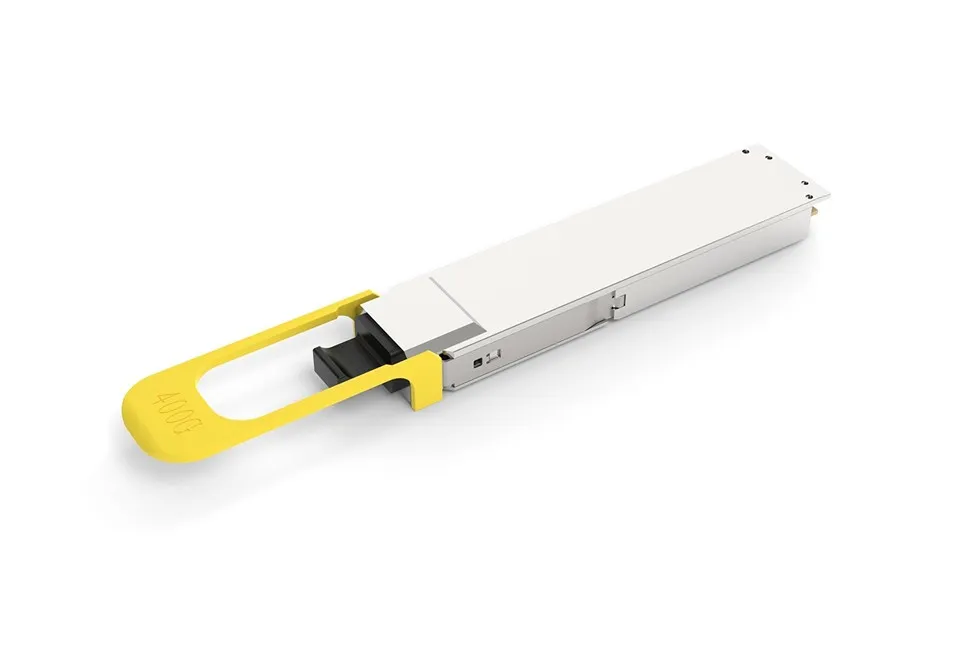
Before we discuss the impact of aging, let's briefly introduce the 400G QSFP - DD FR4. The 400G QSFP - DD FR4 is a high - speed optical transceiver designed to support 400 Gigabit Ethernet over a single - mode fiber (SMF) for distances up to 2 kilometers. It follows the QSFP - DD (Quad Small Form - factor Pluggable Double Density) form factor, which provides a high - density solution for data center and network applications.
This transceiver uses a 4 - lane parallel optical interface, with each lane operating at a data rate of 100 Gbps. It employs PAM4 (4 - level Pulse Amplitude Modulation) signaling to achieve high data rates within a limited bandwidth. The 400G QSFP - DD FR4 has become a popular choice in modern data centers due to its high - speed capabilities, relatively low power consumption, and compatibility with existing network infrastructure.
How Aging Affects 400G QSFP - DD FR4 Performance
1. Optical Transmitter Degradation
The optical transmitter in a 400G QSFP - DD FR4 is a critical component that converts electrical signals into optical signals. Over time, several factors can cause degradation of the transmitter.
One of the primary factors is the aging of the laser diode. Laser diodes are semiconductor devices that emit light when an electric current is applied. As the laser diode ages, its threshold current (the minimum current required to start lasing) may increase. This means that more power is needed to achieve the same output optical power. An increase in threshold current can lead to higher power consumption and potentially overheating of the transceiver, which can further accelerate the aging process.
In addition, the output optical power of the laser diode may decrease over time. This reduction in power can result in a weaker optical signal being transmitted over the fiber, leading to an increased bit - error rate (BER) at the receiver end. A higher BER means that more errors occur during data transmission, which can cause data loss and retransmissions, ultimately degrading the overall performance of the network.
2. Optical Receiver Sensitivity Loss
The optical receiver in the 400G QSFP - DD FR4 is responsible for converting the received optical signals back into electrical signals. Aging can also have a significant impact on the receiver's performance.
The photodetector in the receiver, which converts light into an electrical current, can experience a decrease in sensitivity over time. As the photodetector ages, its ability to detect weak optical signals diminishes. This can be a problem when the transmitted optical power decreases due to transmitter degradation, as the receiver may struggle to accurately detect and decode the signals.

Moreover, the electronic components in the receiver, such as amplifiers and equalizers, can also degrade with age. These components are used to amplify and condition the electrical signals received from the photodetector. As they age, their gain, bandwidth, and linearity characteristics may change, leading to a distortion of the received signals and an increase in the BER.
3. Signal Integrity Degradation
Aging can also affect the signal integrity of the electrical signals within the 400G QSFP - DD FR4. The printed circuit board (PCB) inside the transceiver contains traces that carry the electrical signals between different components. Over time, these traces can experience corrosion and oxidation, which can increase their resistance.
An increase in trace resistance can cause signal attenuation, which means that the strength of the electrical signals decreases as they travel along the traces. This can lead to a reduction in the signal - to - noise ratio (SNR) and an increase in inter - symbol interference (ISI). ISI occurs when the symbols in a digital signal interfere with each other, making it more difficult for the receiver to accurately decode the data.
Furthermore, the connectors in the transceiver can also wear out over time. Loose or corroded connectors can introduce additional signal reflections and losses, further degrading the signal integrity.
Implications for Data Centers and Networks
1. Increased Network Downtime
As the performance of 400G QSFP - DD FR4 transceivers degrades due to aging, the likelihood of network downtime increases. Higher BERs can cause data transmission errors, which may lead to packet loss and retransmissions. If the errors become too frequent, the network may experience outages, disrupting normal operations in data centers.
Network administrators may need to spend more time troubleshooting and replacing aging transceivers to maintain network reliability. This not only increases the operational costs but also reduces the overall productivity of the data center.
2. Higher Power Consumption
The increase in threshold current of the laser diode and the degradation of electronic components can lead to higher power consumption in aging 400G QSFP - DD FR4 transceivers. Higher power consumption not only increases the electricity costs but also generates more heat, which requires additional cooling resources in the data center.
This can have a significant impact on the data center's energy efficiency and environmental footprint. With the growing emphasis on sustainable data center operations, the increased power consumption due to aging transceivers is a concern that needs to be addressed.
3. Compatibility Issues
As transceivers age, their performance may deviate from the original specifications. This can lead to compatibility issues with other network devices. For example, an aging transceiver may not be able to communicate properly with a new switch or router, even if they are supposed to be compatible based on the standard specifications.
These compatibility issues can make it difficult to upgrade or expand the network infrastructure, as new devices may not work seamlessly with the existing aging transceivers.
Mitigating the Impact of Aging
1. Regular Monitoring
One of the most effective ways to mitigate the impact of aging on 400G QSFP - DD FR4 performance is through regular monitoring. Network administrators can use monitoring tools to keep track of key performance indicators such as optical power, BER, and temperature.
By monitoring these parameters, they can detect early signs of degradation and take proactive measures, such as replacing the transceiver before it fails completely. Some advanced monitoring systems can even provide real - time alerts when a transceiver's performance starts to deviate from the normal range.
2. Proper Storage and Handling
Proper storage and handling of 400G QSFP - DD FR4 transceivers can also help extend their lifespan. Transceivers should be stored in a clean, dry, and temperature - controlled environment to prevent moisture, dust, and extreme temperatures from causing damage.
When handling the transceivers, care should be taken to avoid static electricity, which can damage the sensitive electronic components. Static - dissipative mats and wrist straps should be used during installation and removal of the transceivers.
3. Using High - Quality Components
As a supplier, we understand the importance of using high - quality components in the manufacturing of 400G QSFP - DD FR4 transceivers. High - quality laser diodes, photodetectors, and electronic components are more resistant to aging and can provide better long - term performance.
By investing in high - quality components, we can ensure that our transceivers have a longer lifespan and better reliability, reducing the impact of aging on network performance.
Related Products in the 400G Optical Transceiver Family
If you are interested in exploring other 400G optical transceiver options, we also offer 400G QSFP112 FR4, 400G OSFP SR4, and 400G OSFP DR4. These transceivers have their own unique features and are suitable for different applications. The 400G QSFP112 FR4 offers high - speed performance with a different form factor, while the 400G OSFP SR4 and 400G OSFP DR4 are designed for short - reach and long - reach applications respectively.
Contact Us for Procurement
If you are looking for high - quality 400G QSFP - DD FR4 transceivers or have any questions about the impact of aging on their performance, please feel free to contact us. We are committed to providing you with the best products and technical support to meet your network needs. Our team of experts can help you select the most suitable transceivers for your application and offer solutions to mitigate the impact of aging.
References
- "QSFP - DD MSA Specification" - QSFP - DD Multi - Source Agreement Group
- "PAM4 Signaling in High - Speed Optical Communication Systems" - Journal of Optical Communications
- "Reliability and Aging of Semiconductor Laser Diodes" - IEEE Transactions on Electron Devices