

In the ever - evolving landscape of high - speed data transmission, the QDD 400G SR8 has emerged as a critical component. As a proud supplier of the QDD 400G SR8, I am well - positioned to delve into its electromagnetic interference (EMI) performance, a crucial aspect that significantly impacts its functionality and reliability in various applications.
Understanding Electromagnetic Interference
Before we dive into the EMI performance of the QDD 400G SR8, it's essential to understand what electromagnetic interference is. EMI refers to the disruption that occurs when an electromagnetic field affects an electrical circuit, causing a degradation in the performance of electronic devices. This interference can be caused by a variety of sources, including radio frequency emissions, power lines, and other electronic devices operating in the vicinity.
In high - speed data transmission systems like the one employing the QDD 400G SR8, EMI can lead to signal distortion, data errors, and even complete system failure. Therefore, ensuring good EMI performance is of utmost importance to maintain the integrity and efficiency of data transfer.
EMI Performance of QDD 400G SR8
Shielding Design
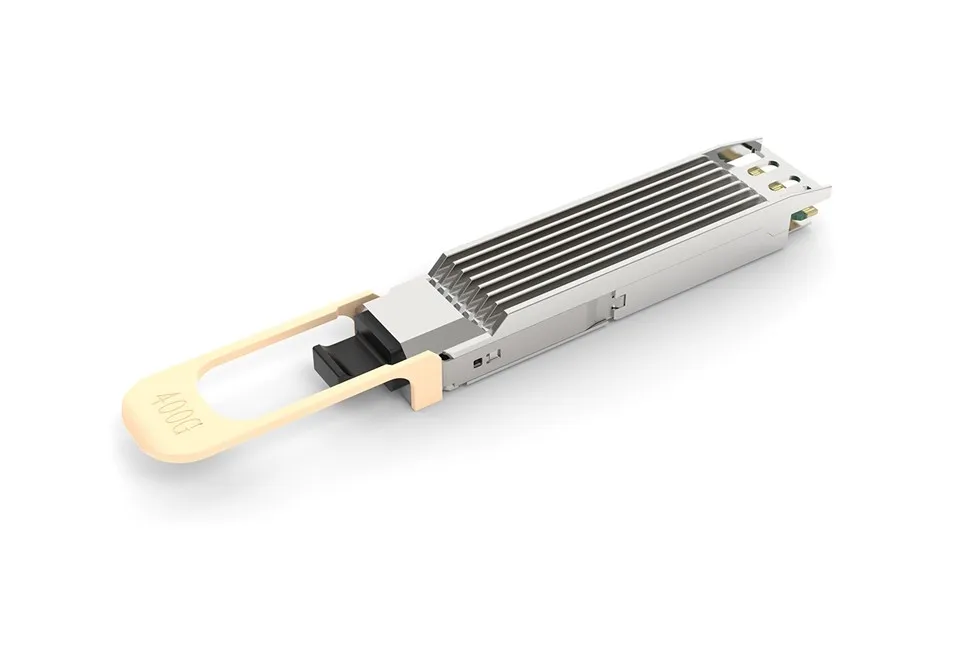
One of the primary factors contributing to the excellent EMI performance of the QDD 400G SR8 is its advanced shielding design. Our engineering team has meticulously crafted a shielding mechanism that effectively contains the electromagnetic fields generated within the module. The shielding is made of high - quality materials with excellent conductivity, which can absorb and redirect the electromagnetic waves, preventing them from leaking out and interfering with other nearby devices.
This shielding design not only protects external devices from the QDD 400G SR8's electromagnetic emissions but also safeguards the internal components of the module from external electromagnetic interference. By minimizing the impact of external EMI sources, the QDD 400G SR8 can maintain stable and reliable operation even in harsh electromagnetic environments.
Circuit Layout Optimization
Another key aspect of the QDD 400G SR8's EMI performance is the optimization of its circuit layout. Our designers have carefully arranged the internal circuits to reduce electromagnetic coupling between different components. They have employed techniques such as proper grounding, isolation of high - frequency and low - frequency circuits, and the use of decoupling capacitors to minimize the generation and propagation of electromagnetic noise.
For example, the power supply lines are carefully routed to ensure a clean and stable power supply to the components, reducing the likelihood of power - related EMI. Additionally, the signal traces are designed to have minimal impedance and crosstalk, which helps to maintain the integrity of the high - speed data signals and reduces the generation of electromagnetic radiation.
Compliance with Standards
The QDD 400G SR8 complies with international electromagnetic compatibility (EMC) standards, such as CISPR 22 and FCC Part 15. These standards set strict limits on the levels of electromagnetic emissions and immunity for electronic devices. By meeting these standards, the QDD 400G SR8 ensures that it can be safely used in a wide range of applications without causing significant electromagnetic interference to other devices.
Our products undergo rigorous testing in certified laboratories to ensure compliance with these standards. The testing process includes measuring the radiated and conducted emissions of the module under various operating conditions and verifying its immunity to external electromagnetic fields. Only after passing these tests can the QDD 400G SR8 be released to the market.
Comparison with Similar Products
OSFP 400G
When comparing the EMI performance of the QDD 400G SR8 with the OSFP 400G, our QDD 400G SR8 has several advantages. The OSFP 400G is also a high - speed optical transceiver, but its larger form factor may make it more challenging to achieve effective EMI shielding. In contrast, the QDD 400G SR8 has a more compact design, which allows for better control of electromagnetic fields.
Our shielding design and circuit layout optimization techniques enable the QDD 400G SR8 to have lower electromagnetic emissions and better immunity to external interference compared to the OSFP 400G in many practical applications.
Optical Module 400G
The Optical Module 400G is a general term for various 400G optical modules. Some of these modules may not have the same level of attention to EMI performance as the QDD 400G SR8. The QDD 400G SR8's dedicated design for high - speed data transmission and EMI suppression ensures that it can provide a more stable and reliable performance in terms of electromagnetic compatibility.
QSFP DD DR4
The QSFP DD DR4 is another popular 400G optical transceiver. While both the QSFP DD DR4 and the QDD 400G SR8 are designed for high - speed data transfer, the QDD 400G SR8 has unique features that enhance its EMI performance. For instance, our shielding and circuit optimization techniques are specifically tailored to the SR8 application scenario, which may result in better EMI control compared to the QSFP DD DR4 in certain environments.
Applications and EMI Considerations
The QDD 400G SR8 is widely used in data centers, high - performance computing, and telecommunications networks. In these applications, the presence of multiple electronic devices in close proximity means that EMI can be a significant concern.
In data centers, for example, thousands of servers, switches, and storage devices are packed into a relatively small space. The QDD 400G SR8's excellent EMI performance ensures that it can operate without interfering with other devices in the rack, reducing the risk of data errors and system failures.
In high - performance computing environments, where high - speed data transfer is essential for complex calculations, the QDD 400G SR8's stable EMI performance helps to maintain the accuracy and efficiency of the computing systems.
Conclusion
As a supplier of the QDD 400G SR8, we take great pride in the electromagnetic interference performance of our product. Our advanced shielding design, circuit layout optimization, and compliance with international standards ensure that the QDD 400G SR8 can provide a reliable and stable solution for high - speed data transmission in various electromagnetic environments.
Whether you are building a new data center, upgrading your high - performance computing system, or expanding your telecommunications network, the QDD 400G SR8 is an excellent choice. Its superior EMI performance will help you avoid the headaches associated with electromagnetic interference and ensure the smooth operation of your systems.
If you are interested in learning more about the QDD 400G SR8 or are considering a purchase, we encourage you to reach out to us for further discussions. Our team of experts is ready to provide you with detailed information and support to meet your specific requirements.

References
- CISPR 22: Information technology equipment - Radio disturbance characteristics - Limits and methods of measurement.
- FCC Part 15: Rules and regulations for radio frequency devices in the United States.