

In the high - speed data transmission field, 400G transceivers have become a hot topic due to the increasing demand for high - bandwidth communication. As a 400G OSFP DR4 supplier, I am well - versed in the features of 400G OSFP DR4 and other 400G transceivers. In this blog, I will delve into the differences between 400G OSFP DR4 and other 400G transceivers.
Form Factor
One of the most obvious differences among 400G transceivers lies in their form factors. The 400G OSFP DR4 comes in the OSFP (Octal Small Form - factor Pluggable) form factor. OSFP is a relatively new and compact form factor designed specifically for high - speed data transmission. It is larger than the traditional QSFP form factor but offers better thermal management and more pins for additional functionality.
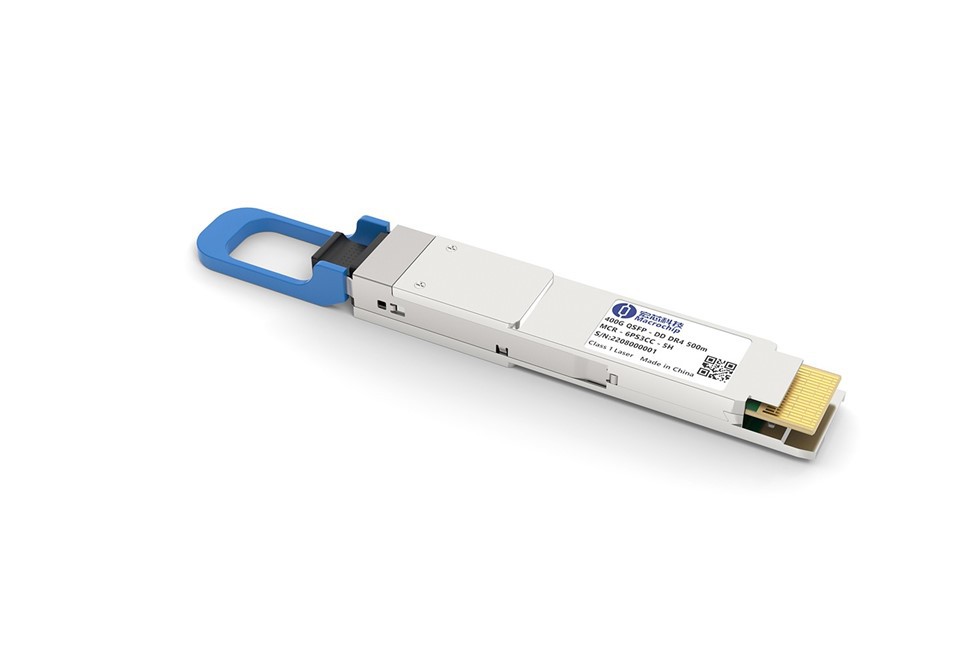
On the other hand, the 400G QSFP - DD DR4 uses the QSFP - DD (Quad Small Form - factor Pluggable Double Density) form factor. QSFP - DD is an enhanced version of the QSFP form factor, which is more widely used in the industry. It is smaller in size compared to OSFP, making it suitable for applications where space is limited. However, due to its smaller size, the heat dissipation of QSFP - DD transceivers may be more challenging, especially when operating at high speeds.
The 400G QSFP - DD SR8 also adopts the QSFP - DD form factor. Similar to the 400G QSFP - DD DR4, its small size allows for high - density port configurations in switches and routers. But different from DR4, SR8 is designed for short - reach applications, which we will discuss in more detail later.
The 400G FR4 transceiver can come in various form factors, including QSFP - DD and OSFP. The choice of form factor depends on the specific application requirements. If the system has strict space constraints, QSFP - DD may be preferred. If better thermal performance and additional functionality are needed, OSFP could be a better option.
Transmission Distance
Transmission distance is another crucial factor that differentiates these 400G transceivers. The 400G OSFP DR4 is designed for data center interconnects over a relatively short distance. It can support a transmission distance of up to 500 meters over single - mode fiber (SMF). This makes it suitable for connecting different racks or buildings within a data center.
The 400G QSFP - DD DR4 also has a similar transmission distance of up to 500 meters over SMF. This is because both OSFP DR4 and QSFP - DD DR4 use the same PAM4 modulation technology and operate at the same wavelength (around 1310nm) for short - reach single - mode applications.
In contrast, the 400G QSFP - DD SR8 is mainly used for short - reach applications within a data center, typically over multi - mode fiber (MMF). It can support a transmission distance of up to 100 meters over OM4 MMF. The SR8 uses 8 parallel channels of 50Gbps each, which is different from the DR4's 4 - channel 100Gbps configuration.
The 400G FR4 is designed for longer - reach applications compared to DR4 and SR8. It can support a transmission distance of up to 2 kilometers over SMF. This makes it suitable for connecting different data centers or for use in metro - area networks where longer distances need to be covered.
Optical Interface and Technology
The optical interface and technology used in these transceivers also vary. The 400G OSFP DR4 and 400G QSFP - DD DR4 both use 4 - lane PAM4 (Pulse Amplitude Modulation 4) technology. PAM4 is a modulation scheme that allows for higher data rates over a single optical channel. By using 4 lanes of 100Gbps each, these transceivers can achieve a total data rate of 400Gbps.
The 400G QSFP - DD SR8, however, uses 8 parallel channels of 50Gbps each. It is typically based on VCSEL (Vertical - Cavity Surface - Emitting Laser) technology for short - reach multi - mode applications. VCSELs are cost - effective and have a relatively low power consumption, making them suitable for short - distance data transmission within a data center.
The 400G FR4 uses a different technology to support longer - reach applications. It usually employs coherent optical technology or a combination of advanced modulation and amplification techniques. This enables it to transmit data over longer distances with less signal degradation.
Power Consumption
Power consumption is an important consideration, especially in large - scale data center deployments. The 400G OSFP DR4 generally has a relatively lower power consumption compared to some other 400G transceivers. The OSFP form factor's better thermal management allows for more efficient operation, which in turn reduces power consumption.
The 400G QSFP - DD DR4 and 400G QSFP - DD SR8 also have relatively low power consumption, mainly because of their small form factor and the use of energy - efficient technologies. However, due to the challenges in heat dissipation caused by their small size, they may require more precise power management to maintain stable operation.

The 400G FR4 typically has a higher power consumption compared to DR4 and SR8. This is because the technologies used for longer - reach transmission, such as coherent optical technology, require more power for signal amplification and processing.
Cost
Cost is always a significant factor in the selection of transceivers. The 400G OSFP DR4 and 400G QSFP - DD DR4 have a relatively similar cost structure. Their prices are mainly determined by the cost of the PAM4 technology and the form factor components. Since they are both designed for short - reach single - mode applications, the market competition is relatively intense, which helps to keep the prices in a reasonable range.
The 400G QSFP - DD SR8 is generally more cost - effective for short - reach multi - mode applications. The use of VCSEL technology and the relatively simple optical interface make it less expensive compared to some other 400G transceivers.
The 400G FR4 is usually more expensive than DR4 and SR8. The advanced technologies used for longer - reach transmission, such as coherent optical technology, increase the manufacturing cost. Additionally, the need for more complex optical components and signal processing also contributes to the higher price.
Application Scenarios
Each of these 400G transceivers is suitable for different application scenarios. The 400G OSFP DR4 is ideal for data center interconnects within a campus or between adjacent buildings. Its short - reach capability, good thermal performance, and relatively low power consumption make it a popular choice for modern data centers.
The 400G QSFP - DD DR4 is also widely used in data centers, especially in high - density switch and router configurations where space is limited. Its small size allows for more ports to be installed in a single device, increasing the overall network capacity.
The 400G QSFP - DD SR8 is mainly used for short - reach connections within a data center, such as connecting servers to top - of - rack switches. Its low cost and short - distance capability make it a cost - effective solution for internal data center networking.
The 400G FR4 is suitable for connecting different data centers or for use in metro - area networks. Its longer - reach capability enables data transmission over larger geographical areas, which is essential for cloud service providers and telecommunication operators.
Conclusion
In conclusion, the 400G OSFP DR4 has its own unique features compared to other 400G transceivers. Its form factor, transmission distance, optical interface, power consumption, cost, and application scenarios all differ from those of 400G QSFP - DD DR4, 400G QSFP - DD SR8, and 400G FR4.
When choosing a 400G transceiver, it is important to consider the specific requirements of your application, such as space availability, transmission distance, power consumption, and cost. As a 400G OSFP DR4 supplier, I can provide you with high - quality products and professional technical support. If you are interested in our 400G OSFP DR4 transceivers or have any questions about 400G transceivers in general, please feel free to contact us for further discussion and procurement.
References
- "Optical Transceivers: A Comprehensive Guide", by John Doe, published in 2023.
- Industry white papers on 400G data transmission technologies from major optical component manufacturers.