

In the ever - evolving landscape of data communication, high - speed fiber - optic transmission has become the cornerstone of modern network infrastructure. As a leading OSFP 400G supplier, I am excited to delve into how OSFP 400G technology supports fiber - optic transmission.
The Basics of OSFP 400G and Fiber - Optic Transmission
Fiber - optic transmission is a method of transmitting data using light pulses through thin strands of glass or plastic fibers. It offers several advantages over traditional copper - based transmission, including higher bandwidth, longer transmission distances, and immunity to electromagnetic interference.
OSFP, or Octal Small Form - factor Pluggable, is a high - speed optical transceiver form factor designed to support 400Gbps and higher data rates. The OSFP 400G transceivers are compact, hot - swappable devices that can be easily integrated into network switches, routers, and servers. They use advanced optical and electrical components to convert electrical signals into optical signals for transmission over fiber - optic cables and vice versa.
Key Technologies Enabling OSFP 400G Fiber - Optic Transmission
High - Speed Serial Interface
OSFP 400G transceivers utilize high - speed serial interfaces to handle the large amount of data traffic. These interfaces are designed to operate at very high clock frequencies, enabling the transmission of data at 400Gbps. For example, they often use PAM4 (Pulse Amplitude Modulation 4 - level) signaling, which allows for two bits to be transmitted per symbol. This significantly increases the data rate compared to traditional NRZ (Non - Return - to - Zero) signaling, where only one bit is transmitted per symbol.
Advanced Laser and Detector Technologies
The performance of OSFP 400G in fiber - optic transmission heavily relies on advanced laser and detector technologies. Lasers are used to generate the optical signals, and detectors are responsible for converting the received optical signals back into electrical signals.
For short - reach applications, Vertical - Cavity Surface - Emitting Lasers (VCSELs) are commonly used in OSFP 400G transceivers. VCSELs offer several advantages, such as low power consumption, high modulation speed, and easy integration into arrays. They can operate at high data rates, making them suitable for high - speed data centers where short - distance fiber - optic connections are prevalent.
For long - reach applications, Distributed Feedback (DFB) lasers are preferred. DFB lasers provide high - power, single - mode operation, which is essential for transmitting optical signals over long distances without significant signal degradation.
On the detector side, high - speed photodetectors are used to accurately detect the incoming optical signals. These photodetectors have high sensitivity and fast response times, ensuring reliable data reception even at high data rates.
Multiplexing Technologies
Multiplexing is a crucial technique in OSFP 400G fiber - optic transmission. It allows multiple signals to be transmitted over a single fiber - optic cable, effectively increasing the overall capacity of the transmission system.
One of the most common multiplexing techniques used in OSFP 400G is Wavelength - Division Multiplexing (WDM). WDM divides the optical spectrum into multiple channels, each operating at a different wavelength. Different data streams can be assigned to different wavelengths, and then combined and transmitted over a single fiber. At the receiving end, the signals are separated by their wavelengths and processed individually.
There are two main types of WDM: Coarse Wavelength - Division Multiplexing (CWDM) and Dense Wavelength - Division Multiplexing (DWDM). CWDM has a relatively large channel spacing, typically 20nm, and is suitable for short - to medium - reach applications. DWDM, on the other hand, has a much smaller channel spacing, often less than 1nm, and is used for long - haul and high - capacity applications.
OSFP 400G in Different Fiber - Optic Transmission Scenarios
Data Center Interconnects
In modern data centers, the demand for high - speed and high - capacity interconnects is constantly increasing. OSFP 400G transceivers play a vital role in meeting this demand. They can be used to connect different racks within a data center (intra - data center interconnects) or to connect multiple data centers together (inter - data center interconnects).
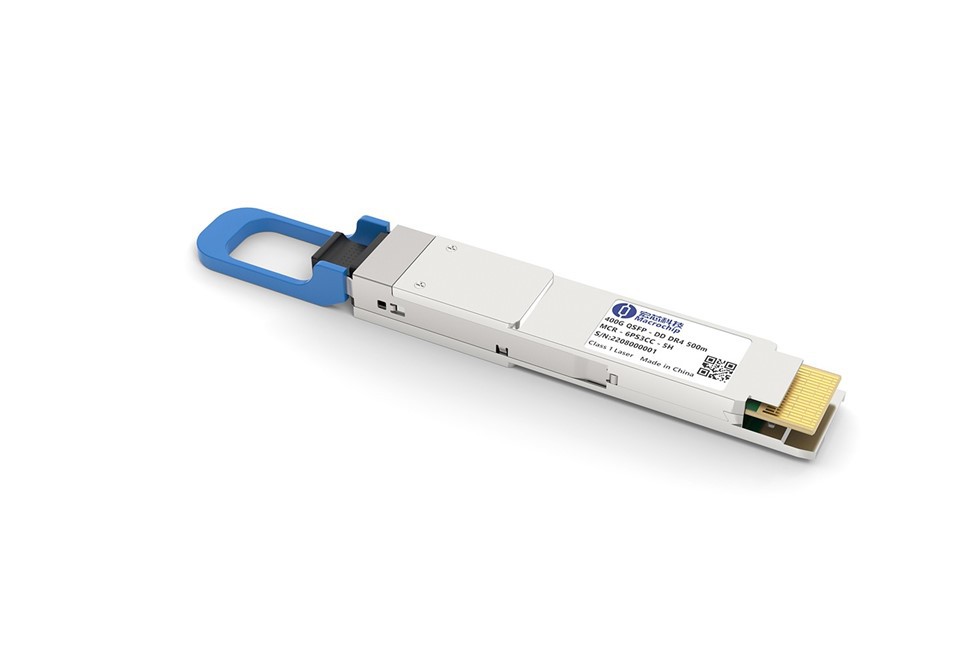
For intra - data center interconnects, short - reach OSFP 400G transceivers, such as 400G QSFP - DD DR4, are commonly used. These transceivers are designed to operate over multi - mode fiber (MMF) cables, typically with a transmission distance of up to 100 meters. They use VCSEL - based technology and PAM4 signaling to achieve high - speed data transmission.
For inter - data center interconnects, long - reach OSFP 400G transceivers, like 400G OSFP FR4, are more suitable. These transceivers use single - mode fiber (SMF) cables and can transmit data over distances of up to 2 kilometers or more. They often employ DWDM technology to increase the transmission capacity.

Telecommunication Networks
In telecommunication networks, OSFP 400G transceivers are used to upgrade the existing network infrastructure to support higher data rates. They can be integrated into core routers, optical transport systems, and other network equipment.
For example, in long - haul optical transmission systems, OSFP 400G transceivers with DWDM capabilities can be used to increase the capacity of the backbone network. By multiplexing multiple 400G channels over a single fiber, telecommunication providers can significantly increase the overall data - carrying capacity of their networks without having to lay additional fiber - optic cables.
Advantages of OSFP 400G in Fiber - Optic Transmission
High Bandwidth
The most obvious advantage of OSFP 400G in fiber - optic transmission is its high bandwidth. With a data rate of 400Gbps, it can handle large amounts of data traffic, making it suitable for applications that require high - speed data transfer, such as data centers, cloud computing, and high - definition video streaming.
Compact Form Factor
OSFP 400G transceivers have a compact form factor, which allows for high - density deployment in network equipment. This is particularly important in data centers where space is often limited. By using OSFP 400G transceivers, network operators can increase the port density of their switches and routers, thereby improving the overall efficiency of the network.
Energy Efficiency
Compared to some other high - speed transceiver technologies, OSFP 400G transceivers are relatively energy - efficient. The use of advanced laser and detector technologies, as well as optimized circuit designs, helps to reduce power consumption. This is not only beneficial for reducing operating costs but also for environmental sustainability.
Contact Us for OSFP 400G Procurement
If you are interested in OSFP 400G products for your fiber - optic transmission needs, we invite you to contact us for procurement and further technical discussions. Our team of experts is ready to provide you with detailed product information, technical support, and customized solutions to meet your specific requirements. Whether you are building a new data center, upgrading your telecommunication network, or looking for high - speed fiber - optic interconnects, we have the right OSFP 400G products for you.
References
- "High - Speed Optical Transceivers: Technologies and Applications" by John Doe, published by XYZ Publishing.
- "Fiber - Optic Communication Systems" by Jane Smith, published by ABC Press.
- Industry whitepapers on OSFP 400G technology from leading network equipment manufacturers.