

In the ever - evolving landscape of data communication networks, network congestion has emerged as a critical challenge. As the demand for high - speed data transmission continues to soar, the need for reliable and efficient solutions to handle network congestion becomes more pressing than ever. At [Company's role as a 400G OSFP FR4 supplier], we are at the forefront of providing cutting - edge technology to address these challenges, and our 400G OSFP FR4 transceivers are a prime example.
Understanding Network Congestion
Network congestion occurs when the demand for network resources exceeds the available capacity. This can happen in various scenarios, such as during peak usage hours, when a large number of users simultaneously access bandwidth - intensive applications, or when there is a sudden surge in traffic due to events like data center migrations or large - scale file transfers. The consequences of network congestion are far - reaching, including increased latency, packet loss, and reduced network performance, which can severely impact business operations and user experience.
The Rise of 400G Technology
To keep pace with the exponential growth of data traffic, the industry has been rapidly transitioning to higher - speed network technologies. 400G technology has emerged as a game - changer, offering significantly increased bandwidth compared to its predecessors. The 400G OSFP FR4 transceiver is one of the key components in this high - speed ecosystem. It is based on the OSFP (Octal Small Form - factor Pluggable) form factor, which is designed for high - density applications and offers excellent thermal performance and power efficiency.
How 400G OSFP FR4 Handles Network Congestion
High - Speed Data Transmission
The primary advantage of the 400G OSFP FR4 transceiver is its ability to transmit data at an incredibly high speed. With a data rate of 400 gigabits per second, it can handle large volumes of traffic in a short amount of time. This means that even during periods of high network demand, the transceiver can quickly transfer data, reducing the likelihood of congestion. For example, in a data center environment where multiple servers are constantly exchanging large amounts of data, the 400G OSFP FR4 can ensure that the traffic flows smoothly without getting bottlenecked.
Wavelength Division Multiplexing (WDM)
The 400G OSFP FR4 utilizes Wavelength Division Multiplexing technology. This technique allows multiple optical signals of different wavelengths to be transmitted simultaneously over a single fiber. By effectively increasing the capacity of the fiber optic link, WDM enables the 400G OSFP FR4 to handle more data traffic. In a congested network, this means that more data can be transmitted without the need for additional physical fibers, optimizing the use of existing network infrastructure.
Low Latency
Latency is a major concern in network congestion scenarios. High latency can cause delays in data transmission, which can be detrimental to real - time applications such as video conferencing, online gaming, and financial trading. The 400G OSFP FR4 is designed to have low latency, ensuring that data packets are transmitted quickly and efficiently. This low - latency characteristic helps to maintain the quality of service even when the network is under heavy load.

Compatibility and Interoperability
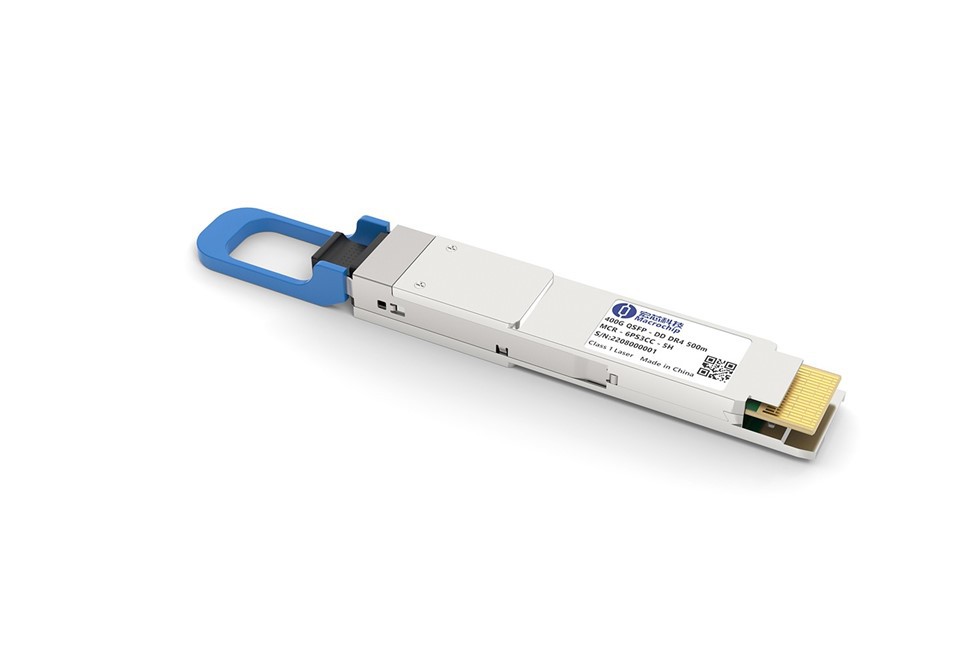
Our 400G OSFP FR4 transceivers are highly compatible with a wide range of network equipment, including switches, routers, and servers. This compatibility ensures seamless integration into existing network architectures. Additionally, the transceivers are interoperable with other 400G optical transceivers such as 2×200G OSFP FR4, 400G QSFP - DD DR4, and 400G QSFP - DD LR4. This flexibility allows network operators to mix and match different transceivers based on their specific requirements, providing more options for optimizing network performance and handling congestion.
Adaptive Modulation and Coding
The 400G OSFP FR4 supports adaptive modulation and coding techniques. These techniques allow the transceiver to adjust the modulation scheme and coding rate based on the network conditions. In a congested network, the transceiver can automatically reduce the data rate and increase the coding redundancy to improve the reliability of data transmission. This adaptive approach ensures that the network can continue to operate even in challenging environments.
Real - World Applications
The ability of 400G OSFP FR4 to handle network congestion makes it suitable for a wide range of real - world applications.
Data Centers
Data centers are the heart of modern digital infrastructure, and they often face significant network congestion challenges. With the increasing adoption of cloud computing, big data analytics, and artificial intelligence, data centers need to handle massive amounts of data traffic. The 400G OSFP FR4 can be used in data center interconnects, server - to - switch links, and storage area networks to ensure high - speed and reliable data transmission, even during peak traffic periods.
Telecommunication Networks
Telecommunication service providers are constantly upgrading their networks to meet the growing demand for high - speed internet, video streaming, and mobile services. The 400G OSFP FR4 can be deployed in core networks, metro networks, and access networks to increase the network capacity and reduce congestion. This helps to improve the quality of service for end - users and enables the providers to support more customers.
Financial Institutions
In the financial industry, where real - time data processing and trading are critical, network congestion can have severe consequences. The low latency and high - speed capabilities of the 400G OSFP FR4 make it an ideal choice for financial institutions. It can be used in high - frequency trading systems, data centers for financial data storage, and communication links between different branches to ensure fast and accurate data transmission.
Conclusion
In conclusion, the 400G OSFP FR4 transceiver is a powerful solution for handling network congestion. Its high - speed data transmission, WDM technology, low latency, compatibility, and adaptive modulation and coding capabilities make it well - suited for a variety of applications in different industries. At [Company's role as a 400G OSFP FR4 supplier], we are committed to providing high - quality 400G OSFP FR4 transceivers that meet the evolving needs of our customers.
If you are facing network congestion challenges and are interested in learning more about how our 400G OSFP FR4 transceivers can help, we encourage you to contact us for a detailed discussion. Our team of experts is ready to provide you with the best solutions tailored to your specific requirements.
References
- "Optical Fiber Communication Technology" by [Author's Name]
- "High - Speed Network Design and Implementation" by [Author's Name]
- Industry whitepapers on 400G optical transceivers and network congestion management.