

Hey there! As a supplier of QDD 400G SR8, I'm super excited to chat with you about the product quality control of this amazing piece of tech. Let's dive right in!
First off, what exactly is QDD 400G SR8? Well, it's a high - speed optical transceiver module that's designed to meet the increasing demand for fast data transmission in modern networks. It can transfer data at a whopping 400 gigabits per second over short - range distances, making it a top choice for data centers and high - performance computing environments.
Now, let's talk about quality control. When it comes to QDD 400G SR8, we take quality very seriously. The whole process starts right from the sourcing of raw materials. We only work with trusted suppliers who can provide us with high - grade components. For example, the optical chips we use are from well - known manufacturers with a proven track record of reliability. This ensures that the foundation of our QDD 400G SR8 is solid and can support high - speed and stable data transmission.
Once we have the raw materials, the manufacturing process begins. Our production facilities are equipped with state - of - the - art machinery and are staffed by highly skilled technicians. Every step of the assembly is carefully monitored. For instance, during the soldering process, we use automated machines that are calibrated to ensure precise and consistent connections. This helps to prevent any loose connections that could lead to signal loss or other performance issues.
After the initial assembly, the QDD 400G SR8 modules go through a series of rigorous testing procedures. One of the first tests is the electrical performance test. We use specialized test equipment to measure parameters like bit error rate, signal strength, and eye diagram. These tests help us to determine if the module can meet the specified electrical performance standards. If any module fails these tests, it's immediately taken out of the production line for further inspection and possible rework.
Next up is the optical performance test. Since QDD 400G SR8 is an optical transceiver, its optical performance is crucial. We test things like optical output power, wavelength stability, and extinction ratio. We use optical spectrum analyzers and other optical test instruments to carry out these tests. This ensures that the module can send and receive optical signals accurately and efficiently.
Another important aspect of quality control is environmental testing. We know that QDD 400G SR8 will be used in various environments, so it needs to be able to withstand different temperatures, humidity levels, and vibrations. We subject the modules to temperature cycling tests, where they are exposed to a wide range of temperatures from - 40°C to 85°C. This helps us to identify any potential issues that could occur due to thermal expansion and contraction. We also conduct humidity tests and vibration tests to ensure the modules' reliability in real - world conditions.
In addition to these in - house tests, we also follow industry standards and certifications. Our QDD 400G SR8 products are compliant with standards such as IEEE 802.3bs, which defines the 400 Gigabit Ethernet physical layer and management parameters. This compliance not only ensures the quality of our products but also makes them compatible with other network equipment in the market.
Now, let's compare QDD 400G SR8 with some other similar products. For example, the 400G LR4 is also a 400G optical transceiver, but it's designed for long - range transmission. While the 400G LR4 is great for connecting data centers over long distances, QDD 400G SR8 shines in short - range applications where high - speed data transfer is needed within a data center.
The Optical Transceiver Module is a more general term, and QDD 400G SR8 is a specific type within this category. Our QDD 400G SR8 offers high - speed performance and excellent quality control, which gives it an edge over some other optical transceiver modules in the market.

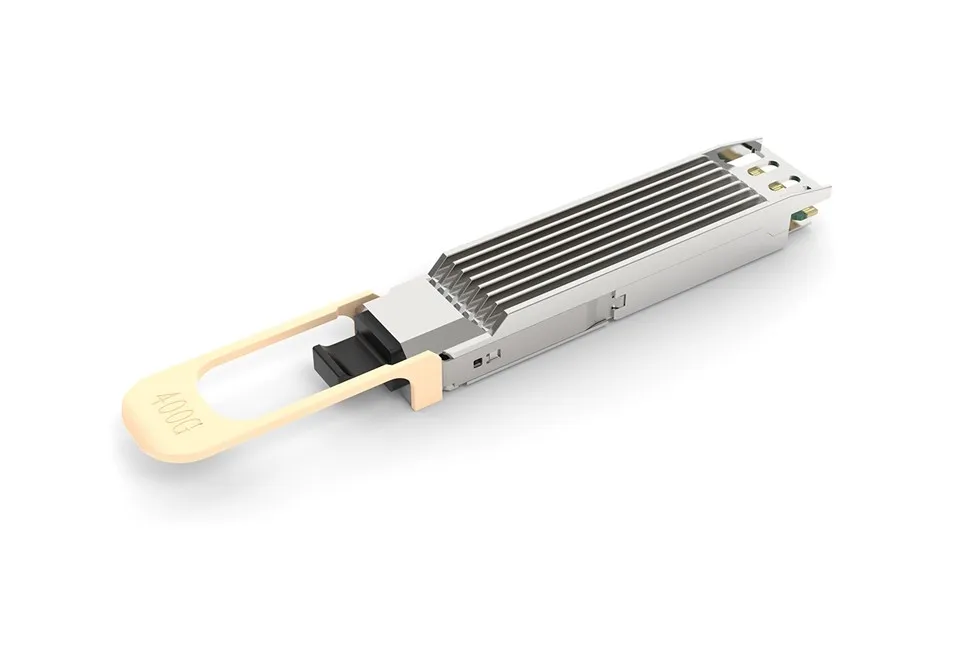
And then there's the OSFP 400G. OSFP 400G is another form factor for 400G transceivers. While it has its own advantages, our QDD 400G SR8 provides a different set of features and performance characteristics that make it suitable for specific customer needs.
So, if you're in the market for a high - quality QDD 400G SR8, you've come to the right place. Our strict quality control measures ensure that you'll get a product that's reliable, high - performing, and built to last. Whether you're running a large - scale data center or a high - performance computing cluster, our QDD 400G SR8 can meet your needs.
If you're interested in learning more about our QDD 400G SR8 or are looking to make a purchase, don't hesitate to reach out. We're always happy to have a chat about your requirements and see how we can help you. We can provide you with detailed product specifications, pricing information, and any other support you might need.
In conclusion, the product quality control of QDD 400G SR8 is a multi - step process that starts from raw material sourcing and goes all the way through to environmental testing. We're committed to providing the best possible product to our customers, and our quality control measures are a testament to that. So, if you're in the market for a high - speed, reliable optical transceiver, give our QDD 400G SR8 a try.
References:
- IEEE 802.3bs Standard for Ethernet
- Industry reports on optical transceiver technology