

Hey there! As a supplier of 400G QSFP112 SR4 optical transceivers, I often get asked about the chromatic dispersion tolerance of these devices. So, let's dive right into it and break down what chromatic dispersion tolerance is and how it relates to our 400G QSFP112 SR4.
What is Chromatic Dispersion?
First off, let's understand what chromatic dispersion is. In simple terms, chromatic dispersion is the spreading of light pulses as they travel through an optical fiber. Light is made up of different wavelengths, and each wavelength travels at a slightly different speed through the fiber. This difference in speed causes the light pulses to spread out over time, which can lead to signal degradation and errors in data transmission.
Why is Chromatic Dispersion Tolerance Important?
Chromatic dispersion tolerance is crucial because it determines how far a signal can travel through an optical fiber without significant degradation. If the chromatic dispersion of the fiber exceeds the tolerance of the optical transceiver, the signal quality will deteriorate, leading to higher bit error rates and potentially causing communication failures.
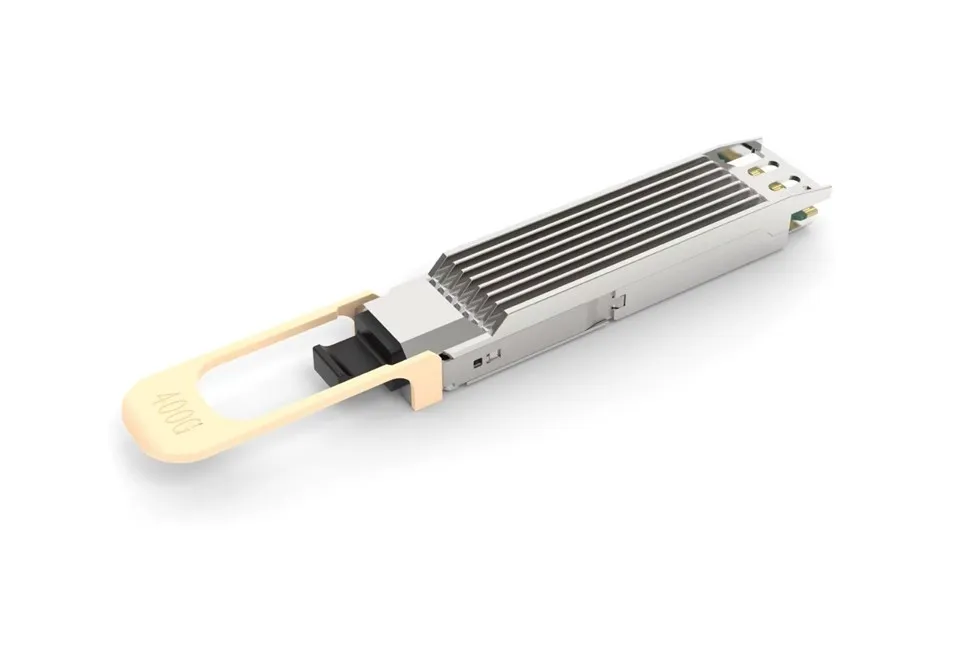

In the case of 400G QSFP112 SR4, which is designed for short - reach applications, understanding the chromatic dispersion tolerance helps us ensure that the transceiver can operate effectively within the intended distance range.
Chromatic Dispersion Tolerance of 400G QSFP112 SR4
The 400G QSFP112 SR4 is typically used for short - distance connections, usually within a data center environment. For short - reach applications, the chromatic dispersion is generally not a major concern compared to long - haul transmissions.
Our 400G QSFP112 SR4 transceivers are designed to have a relatively high tolerance for chromatic dispersion within the short distances they are intended to cover. While the exact chromatic dispersion tolerance can vary depending on the specific design and manufacturing process, it is optimized to work well with multimode fibers commonly used in data center cabling.
Multimode fibers have different characteristics compared to single - mode fibers, and the chromatic dispersion in multimode fibers is less of an issue for short - reach applications. Our 400G QSFP112 SR4 transceivers are engineered to take advantage of these characteristics and provide reliable data transmission over short distances.
Comparison with Other Transceivers
Let's take a quick look at how the chromatic dispersion tolerance of 400G QSFP112 SR4 compares to other transceivers. For example, the 400G QSFP - DD FR4 is designed for medium - reach applications. It has to deal with more significant chromatic dispersion because it is intended to cover longer distances. As a result, it may have different requirements for chromatic dispersion compensation compared to our 400G QSFP112 SR4.
Another transceiver is the QSFP DD SR8. While it is also for short - reach applications like the 400G QSFP112 SR4, the specific design and performance characteristics may lead to differences in chromatic dispersion tolerance. Each transceiver is optimized for its specific use case, and understanding these differences can help customers choose the right product for their network.
Impact on Data Center Networks
In a data center network, the chromatic dispersion tolerance of the 400G QSFP112 SR4 plays an important role. Data centers rely on high - speed, reliable connections between servers, switches, and storage devices. Our 400G QSFP112 SR4 transceivers ensure that data can be transmitted quickly and accurately within the short - distance environment of the data center.
By having a good chromatic dispersion tolerance, we can minimize the risk of signal degradation and ensure that the network operates smoothly. This is especially important as data centers continue to grow in size and complexity, and the demand for high - speed data transmission increases.
How We Ensure Chromatic Dispersion Tolerance
As a supplier, we take several steps to ensure that our 400G QSFP112 SR4 transceivers have the appropriate chromatic dispersion tolerance. First, we use high - quality components in the manufacturing process. The lasers, detectors, and other optical elements are carefully selected to provide optimal performance.
We also conduct extensive testing during the production process. Each transceiver is tested under different conditions to ensure that it meets the specified chromatic dispersion tolerance. This helps us identify any potential issues early on and make necessary adjustments to the manufacturing process.
Applications of 400G QSFP112 SR4
The 400G QSFP112 SR4 is widely used in data center interconnects, high - performance computing clusters, and other short - reach applications. Its high - speed data transmission capabilities and relatively high chromatic dispersion tolerance make it an ideal choice for these environments.
For example, in a data center, the SR4 Optical Module can be used to connect servers to switches or to connect different racks within the data center. The short - reach nature of the 400G QSFP112 SR4 makes it a cost - effective solution for these types of connections.
Conclusion
In conclusion, the chromatic dispersion tolerance of 400G QSFP112 SR4 is an important factor in ensuring reliable data transmission in short - reach applications. Our transceivers are designed to have a high tolerance for chromatic dispersion within the intended distance range, which helps minimize signal degradation and ensure smooth network operation.
If you're in the market for 400G QSFP112 SR4 transceivers or have any questions about chromatic dispersion tolerance, feel free to reach out to us. We're here to help you find the right solution for your network needs.
References
- Optical Fiber Communication Principles and Practice, John M. Senior
- Data Center Networking: Technologies and Solutions, Various Authors