

In the ever-evolving landscape of high-speed data transmission, 400G OSFP FR4 connections have emerged as a crucial technology for meeting the increasing demands of modern networks. As a leading supplier of 400G OSFP FR4 transceivers, I often encounter questions from customers regarding the number of fibers required for a 400G OSFP FR4 connection. In this blog post, I will delve into this topic, providing a comprehensive understanding of the fiber requirements for 400G OSFP FR4 connections.
Understanding 400G OSFP FR4 Technology
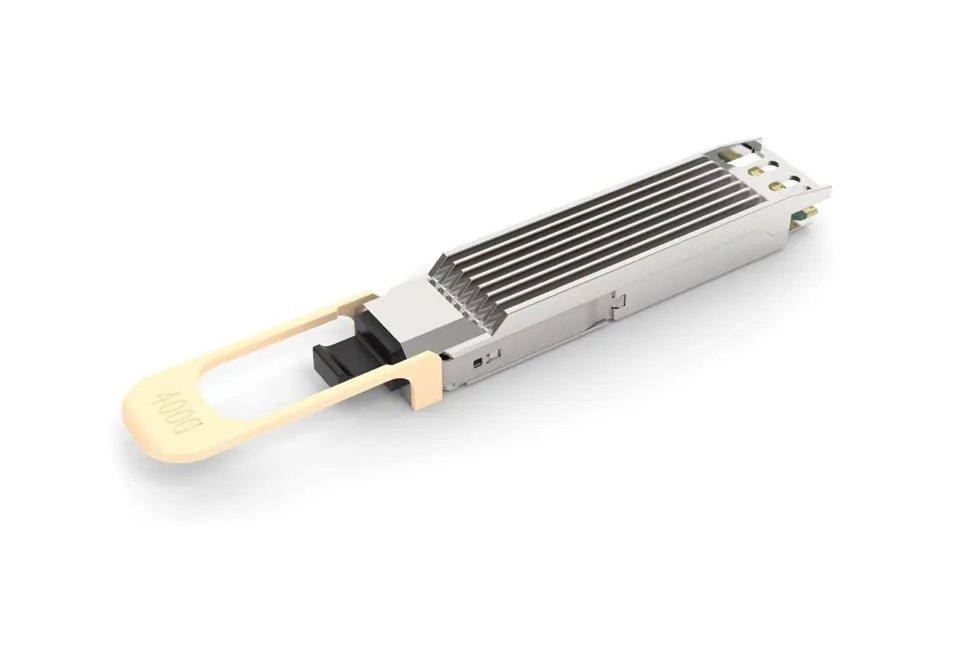
Before we discuss the fiber requirements, let's first understand what 400G OSFP FR4 technology is. The OSFP (Octal Small Form-factor Pluggable) is a high-density, high-speed optical transceiver form factor designed for data center and high-performance computing applications. The "400G" in 400G OSFP FR4 indicates the transmission speed of 400 gigabits per second, which is essential for handling large volumes of data traffic in modern networks.
The "FR4" in 400G OSFP FR4 stands for "400 Gigabit Ethernet, Fixed Reach, 4-lane." This means that the transceiver uses four lanes of data transmission to achieve the 400G speed. Each lane operates at a speed of 100Gbps, and the four lanes work together to provide the overall 400G transmission rate.
Fiber Requirements for 400G OSFP FR4 Connection
For a 400G OSFP FR4 connection, a total of 8 fibers are required. This is because the 400G OSFP FR4 transceiver uses a duplex fiber connection for each of the four lanes. A duplex fiber connection consists of two fibers: one for transmitting data (Tx) and one for receiving data (Rx). Since there are four lanes in a 400G OSFP FR4 transceiver, and each lane requires a duplex fiber connection, the total number of fibers needed is 4 x 2 = 8.
The use of 8 fibers in a 400G OSFP FR4 connection ensures reliable and high-speed data transmission. The duplex fiber design allows for full-duplex communication, which means that data can be transmitted and received simultaneously on each lane. This significantly increases the efficiency of the data transmission process and enables the 400G OSFP FR4 transceiver to achieve its high-speed performance.
Comparison with Other 400G Transceiver Technologies
To better understand the fiber requirements for 400G OSFP FR4 connections, let's compare them with other 400G transceiver technologies.
400G QSFP-DD LR4
The 400G QSFP-DD LR4 is another popular 400G transceiver technology. Similar to the 400G OSFP FR4, the 400G QSFP-DD LR4 also uses four lanes of data transmission to achieve the 400G speed. However, the 400G QSFP-DD LR4 uses a different fiber connection method. It typically uses a single-mode fiber (SMF) with a duplex fiber connection for the entire transceiver, rather than a duplex fiber connection for each lane. As a result, the 400G QSFP-DD LR4 only requires 2 fibers for a connection, which is fewer than the 8 fibers required for a 400G OSFP FR4 connection.
QSFP DD SR8
The QSFP DD SR8 is a short-reach 400G transceiver technology. It uses eight lanes of data transmission, with each lane operating at a speed of 50Gbps. Similar to the 400G OSFP FR4, the QSFP DD SR8 uses a duplex fiber connection for each lane. Therefore, the QSFP DD SR8 requires a total of 16 fibers for a connection (8 lanes x 2 fibers per lane), which is more than the 8 fibers required for a 400G OSFP FR4 connection.
400G OSFP DR4+
The 400G OSFP DR4+ is an enhanced version of the 400G OSFP DR4 transceiver. It also uses four lanes of data transmission to achieve the 400G speed. Similar to the 400G OSFP FR4, the 400G OSFP DR4+ requires a total of 8 fibers for a connection, as it uses a duplex fiber connection for each of the four lanes.
Factors Affecting Fiber Selection
When selecting fibers for a 400G OSFP FR4 connection, several factors need to be considered.
Fiber Type
The most commonly used fiber type for 400G OSFP FR4 connections is single-mode fiber (SMF). SMF has a small core diameter, which allows for long-distance transmission with low attenuation. This makes it suitable for applications where the data needs to be transmitted over a relatively long distance, such as in data centers or between different buildings.

Fiber Quality
The quality of the fiber also plays an important role in the performance of a 400G OSFP FR4 connection. High-quality fibers with low attenuation and low dispersion are preferred, as they can ensure reliable and high-speed data transmission. It is recommended to use fibers that meet the relevant industry standards, such as the ITU-T G.652 standard for single-mode fibers.
Fiber Length
The length of the fiber is another factor that needs to be considered. The maximum transmission distance of a 400G OSFP FR4 connection is typically around 2 kilometers. Therefore, the fiber length should be within this range to ensure proper operation of the transceiver. If the fiber length exceeds the maximum transmission distance, signal degradation may occur, which can affect the performance of the connection.
Conclusion
In conclusion, a 400G OSFP FR4 connection requires a total of 8 fibers, which are used for the duplex fiber connection of each of the four lanes in the transceiver. This fiber configuration ensures reliable and high-speed data transmission, making the 400G OSFP FR4 technology suitable for a wide range of applications in modern networks.
As a leading supplier of 400G OSFP FR4 transceivers, we are committed to providing high-quality products and excellent customer service. If you have any questions or need further information about 400G OSFP FR4 connections or our products, please feel free to contact us for procurement and negotiation. We look forward to working with you to meet your high-speed data transmission needs.
References
- ITU-T G.652: Characteristics of a single-mode optical fibre and cable.
- IEEE 802.3bs: 400 Gigabit Ethernet and 200 Gigabit Ethernet over Coax and Optical Media.