

In the fast - evolving landscape of data center networking, the demand for high - speed, reliable, and efficient network solutions is ever - increasing. The 800G OSFP SR8 is emerging as a key player in this arena, offering remarkable performance and seamless integration with network switches. As a leading supplier of 800G OSFP SR8 products, I am excited to delve into how this cutting - edge technology interacts with network switches.
Understanding the 800G OSFP SR8
Before we explore its interaction with network switches, let's first understand what the 800G OSFP SR8 is. The 800G OSFP SR8 is an optical transceiver module that adheres to the OSFP (Octal Small Form - factor Pluggable) standard. It is designed to support data rates of up to 800 Gigabits per second (Gbps), making it ideal for high - bandwidth applications in data centers.
The "SR8" in its name stands for Short Reach 8 - lane. This means that it uses 8 parallel optical lanes to achieve its high - speed data transmission, typically over short distances, usually within a data center environment. The 800G OSFP SR8 operates at a wavelength of around 850nm and is optimized for multi - mode fiber (MMF) connections, which are commonly used for short - range networking within data centers.
Physical and Electrical Compatibility
One of the fundamental aspects of how the 800G OSFP SR8 interacts with network switches is through physical and electrical compatibility. Network switches are equipped with specific ports that are designed to accommodate different types of transceiver modules. The OSFP form factor of the 800G OSFP SR8 is standardized, which means that it can be easily plugged into OSFP - compliant ports on network switches.

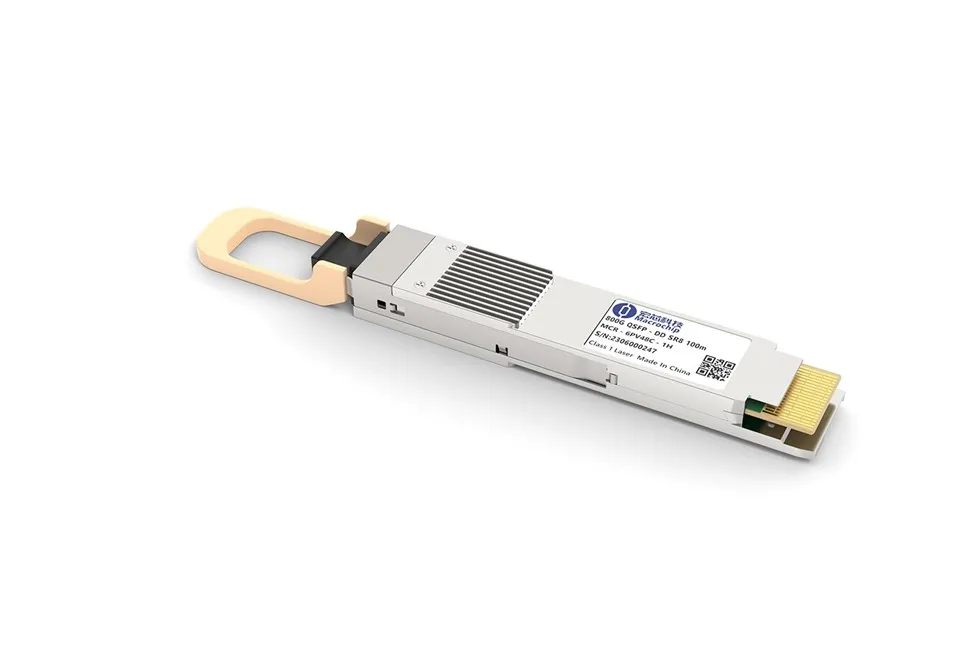
These ports provide the necessary electrical interfaces for power supply, data transmission, and control signals. The 800G OSFP SR8 module draws power from the switch port, typically operating at a voltage range that is compatible with the switch's power management system. The electrical signals are used to establish communication between the module and the switch, allowing for the exchange of data and control information.
Data Transmission and Signal Processing
Once the 800G OSFP SR8 is physically connected to the network switch, the process of data transmission begins. The module receives electrical data signals from the switch's port and converts them into optical signals using its internal laser diodes. These optical signals are then transmitted over the multi - mode fiber cables to the destination.
On the receiving end, the 800G OSFP SR8 at the other end of the fiber link converts the optical signals back into electrical signals and sends them to the connected network switch. This conversion process is crucial for high - speed data transfer, as optical signals can travel much faster and with less interference compared to electrical signals over long distances.
The network switch plays a vital role in signal processing. It is responsible for managing the flow of data, ensuring that it is routed correctly to its destination. The switch uses its internal forwarding tables and algorithms to determine the best path for the data packets. The 800G OSFP SR8, on the other hand, focuses on the efficient conversion and transmission of the data signals, working in tandem with the switch to achieve seamless data transfer.
Protocol and Standard Compliance
The 800G OSFP SR8 is designed to comply with various industry standards and protocols, which is essential for its proper interaction with network switches. For example, it adheres to the IEEE 802.3ck standard for 800 Gigabit Ethernet, which defines the physical layer specifications for high - speed data transmission.
Compliance with these standards ensures that the 800G OSFP SR8 can communicate effectively with network switches that also support the same standards. It allows for interoperability between different vendors' products, providing flexibility and choice for data center operators. The switch can recognize the module based on its standard - compliant signaling and configuration, enabling it to configure the appropriate settings for data transmission.
Management and Monitoring
Modern network switches are equipped with management and monitoring capabilities, and the 800G OSFP SR8 can be integrated into these systems. The module has built - in diagnostic functions that can provide information about its operating status, such as temperature, power consumption, and signal strength.
The network switch can access this information through the management interface, allowing network administrators to monitor the performance of the 800G OSFP SR8 in real - time. This monitoring helps in detecting potential issues early, such as overheating or signal degradation, and taking proactive measures to ensure the reliability of the network.
Comparison with Other 800G Transceivers
When considering the interaction with network switches, it's also important to compare the 800G OSFP SR8 with other 800G transceiver options. For example, the 800G OSFP DR8 is another 800G transceiver that uses a different transmission technology. The "DR8" stands for Dual - Rate 8 - lane, and it is designed for longer - reach applications over single - mode fiber (SMF).
In contrast, the 800G OSFP SR8 is optimized for short - reach multi - mode fiber connections. Depending on the network requirements, such as the distance between switches and the type of fiber infrastructure available, network operators can choose between these different transceiver options. Another option is the 800G QSFP - DD SR8, which has a different form factor (QSFP - DD) but also supports 800G short - reach data transmission.
Applications in Data Centers
The interaction between the 800G OSFP SR8 and network switches has significant implications for data center applications. In modern data centers, there is a growing need for high - speed interconnects between servers, storage systems, and network devices. The 800G OSFP SR8 can be used to connect top - of - rack (ToR) switches to servers, providing high - bandwidth links for data transfer.
It can also be used for interconnecting spine switches in a data center's network fabric, enabling fast and efficient communication between different parts of the network. With the increasing adoption of technologies such as artificial intelligence (AI), machine learning (ML), and big data analytics, the demand for high - speed data transfer within data centers is only going to increase, and the 800G OSFP SR8 is well - positioned to meet these requirements.
Future Developments
As the networking industry continues to evolve, we can expect further developments in the interaction between the 800G OSFP SR8 and network switches. Future network switches may offer enhanced features, such as better power management, more advanced signal processing capabilities, and improved compatibility with emerging technologies.
The 800G OSFP SR8 may also see improvements in its performance, such as higher data rates, lower power consumption, and increased reliability. These developments will further enhance the efficiency and effectiveness of the network, enabling data centers to handle even more demanding workloads.
Conclusion
In conclusion, the 800G OSFP SR8 is a powerful and versatile optical transceiver module that interacts seamlessly with network switches. Through physical and electrical compatibility, efficient data transmission, protocol compliance, and management capabilities, it provides a reliable solution for high - speed networking in data centers.
As a supplier of 800g Optical Transceiver products, including the 800G OSFP SR8, we are committed to providing high - quality, reliable, and innovative solutions to meet the evolving needs of the networking industry. If you are interested in learning more about our 800G OSFP SR8 products or are looking to make a purchase for your network infrastructure, we invite you to reach out to us for a detailed discussion and to explore how our products can enhance your network performance.
References
- IEEE 802.3ck Standard for 800 Gigabit Ethernet
- Industry whitepapers on high - speed optical transceivers
- Data center networking industry reports