

Hey there! As a supplier of 800G OSFP DR8 transceivers, I've been getting a lot of questions about how these little powerhouses handle network jitter. So, I thought I'd sit down and share some insights on this topic.
First off, let's quickly cover what network jitter is. In simple terms, jitter is the variation in the delay of received packets in a network. It's like a bumpy road for your data. When packets don't arrive at a consistent time, it can cause all sorts of problems, especially for real - time applications like video conferencing, online gaming, and voice over IP (VoIP).
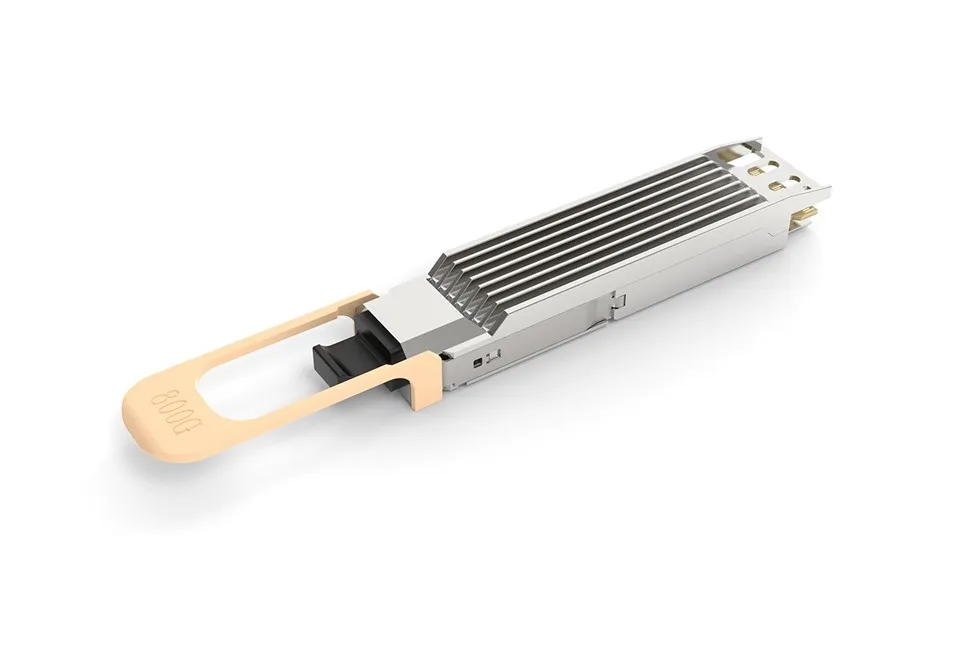
Now, the 800G OSFP DR8 is a high - speed optical transceiver designed to meet the growing demands of data centers and high - performance networks. It operates at an astonishing 800 gigabits per second, which is just mind - blowing when you think about it. But how does it deal with the pesky issue of network jitter?
One of the key features of the 800G OSFP DR8 is its advanced clock and data recovery (CDR) technology. The CDR circuit in the transceiver is like a super - accurate timekeeper. It can detect the incoming data stream and extract the clock signal from it. This clock signal is crucial because it helps the transceiver know exactly when to sample the data. When there's jitter in the network, the CDR can adjust its internal clock to compensate for the variations in packet arrival times. So, even if the packets are coming in a bit late or early, the CDR can still accurately recover the data.
Another factor that helps the 800G OSFP DR8 handle jitter is its high - quality optical components. The transceiver uses high - performance lasers and photodetectors that are designed to be very stable. These components can transmit and receive data with a high degree of precision. When the data is being sent over the fiber optic cable, any small variations in the signal due to jitter are less likely to cause errors because of the quality of these optical parts.
Let's talk a bit about the buffering capabilities of the 800G OSFP DR8. The transceiver has an internal buffer that can store incoming data for a short period. This buffer acts like a safety net. When there's a sudden burst of jitter and packets start arriving at irregular intervals, the buffer can hold onto the data until it can be processed in an orderly manner. It helps to smooth out the flow of data and reduces the impact of jitter on the overall network performance.
Now, if you're in the market for high - speed optical transceivers, you might also be interested in some of our other products. We offer the 800G OSFP 2×FR4, which is another great option for high - performance networks. It provides a different configuration that might suit your specific needs. Also, our 800G Optical Module is a versatile choice that offers excellent performance. And if you're looking for a short - reach solution, the 800G OSFP SR8 could be the right fit for you.
In a real - world scenario, the 800G OSFP DR8 has proven to be very effective in handling network jitter. For example, in large data centers where there are multiple servers and a high volume of data traffic, jitter can be a significant issue. But with the 800G OSFP DR8 installed, the network can maintain a high level of stability. Real - time applications run smoothly, and the overall user experience is greatly improved.
When it comes to compatibility, the 800G OSFP DR8 is designed to work seamlessly with a wide range of network equipment. Whether you're using switches, routers, or servers from different manufacturers, you can be confident that the transceiver will integrate well into your existing network infrastructure. This compatibility also helps in reducing the chances of jitter - related problems because the transceiver can communicate effectively with other devices in the network.
We understand that network jitter can be a headache for network administrators and IT professionals. That's why we've put a lot of effort into developing the 800G OSFP DR8 to be as reliable as possible. Our team of engineers has spent countless hours testing and optimizing the transceiver to ensure that it can handle the toughest network conditions.
If you're considering upgrading your network to handle higher data speeds and reduce the impact of network jitter, the 800G OSFP DR8 is definitely worth a look. We're always here to answer any questions you might have and to help you find the best solution for your specific network requirements. Whether you're running a small business network or a large - scale data center, we've got the expertise to guide you through the process.
So, if you're interested in learning more about our 800G OSFP DR8 or any of our other products, don't hesitate to reach out. We'd love to have a chat with you and discuss how our solutions can benefit your network. Whether it's about handling network jitter or just improving overall network performance, we're here to help.
References:

- Industry whitepapers on high - speed optical transceivers
- Technical specifications of 800G OSFP DR8 transceivers
- Case studies on network performance improvement with 800G optical solutions