

In the ever - evolving landscape of network technology, the demand for higher data transfer rates and improved network performance is insatiable. As a leading supplier of 400G QSFP112 DR4, I am excited to delve into how this remarkable product contributes to network performance improvement.
Understanding 400G QSFP112 DR4
Before we explore its impact on network performance, let's first understand what 400G QSFP112 DR4 is. The 400G QSFP112 DR4 is an optical transceiver that adheres to the QSFP112 form - factor standard. It is designed to support a data rate of 400 Gigabits per second (Gbps), which is a significant leap forward from previous generations of network equipment.
The "DR4" in its name stands for "Dual - Rate 4 - Lane," which means it uses four lanes of 100Gbps each to achieve the overall 400Gbps data rate. This multi - lane architecture allows for parallel data transmission, significantly increasing the bandwidth and throughput of the network.
High - Speed Data Transmission
One of the most obvious ways 400G QSFP112 DR4 contributes to network performance improvement is through its high - speed data transmission capabilities. In today's digital age, large amounts of data are generated and transferred every second. Whether it's in data centers, cloud computing environments, or high - performance computing clusters, the need for fast data transfer is crucial.
For example, in a large - scale data center, servers need to communicate with each other at high speeds to process and store data efficiently. With 400G QSFP112 DR4 transceivers, the time required to transfer large datasets between servers is greatly reduced. This not only improves the overall efficiency of data center operations but also enables real - time data processing and analysis, which is essential for applications such as artificial intelligence and machine learning.
Moreover, in cloud computing environments, where multiple users access and share resources simultaneously, high - speed data transmission ensures a seamless user experience. With 400G QSFP112 DR4, cloud service providers can offer faster response times and higher - quality services to their customers.
Reduced Latency
Latency, or the delay in data transmission, is another critical factor in network performance. High latency can lead to slow response times, buffering in video streaming, and poor performance in online gaming and other real - time applications.
The 400G QSFP112 DR4 transceiver helps to reduce latency in several ways. Firstly, its high - speed data transmission capabilities mean that data can be transferred more quickly, reducing the time it takes for information to travel from the source to the destination. Secondly, the advanced signal processing technology used in these transceivers minimizes the time spent on error correction and signal regeneration, further reducing latency.
In applications such as financial trading, where even a millisecond of delay can result in significant financial losses, the low - latency feature of 400G QSFP112 DR4 is invaluable. It allows traders to execute transactions in real - time, ensuring they can take advantage of market opportunities as they arise.
Power Efficiency
In addition to high - speed data transmission and low latency, power efficiency is also an important consideration in network design. As data centers and network infrastructure continue to grow, the energy consumption of network equipment has become a major concern.
The 400G QSFP112 DR4 transceiver is designed with power efficiency in mind. Compared to previous generations of transceivers, it consumes less power while still delivering high - performance data transmission. This is achieved through the use of advanced semiconductor technology and optimized circuit design.
By reducing power consumption, data centers can lower their operating costs and reduce their carbon footprint. Additionally, less power consumption means less heat generation, which simplifies the cooling requirements of the data center, further reducing energy costs.
Compatibility and Scalability
Compatibility and scalability are essential for any network technology. The 400G QSFP112 DR4 transceiver is designed to be compatible with existing network infrastructure, making it easy for network operators to upgrade their networks without having to replace all of their equipment.
It can be used in conjunction with other optical transceivers, such as the QSFP DD LR4, to create a hybrid network that combines different data rates and transmission distances. This flexibility allows network operators to design networks that meet their specific requirements and can be easily scaled as their needs grow.

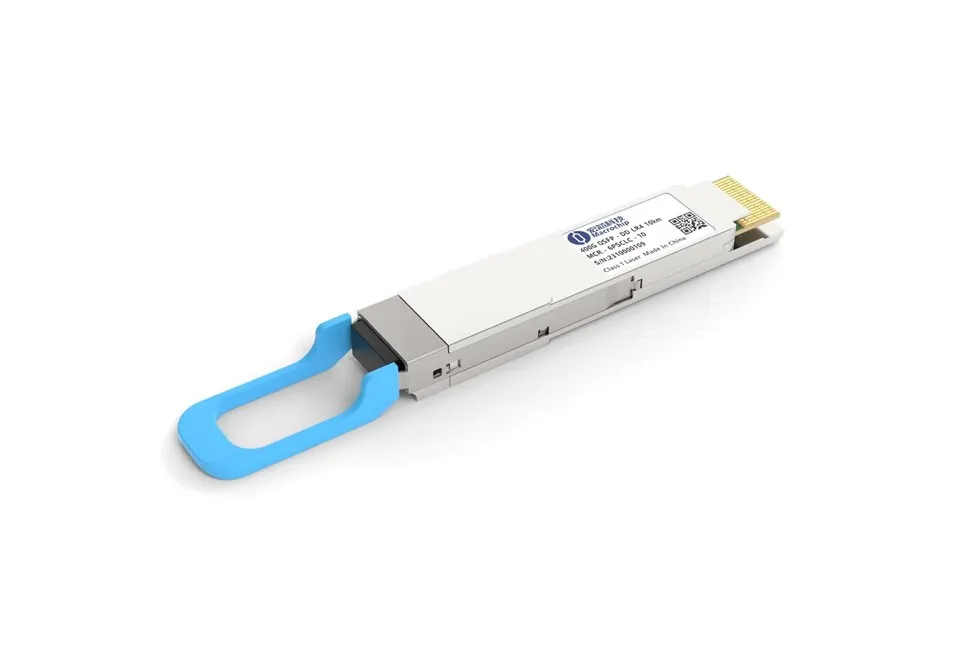
For example, a network operator may start with a 100Gbps network and gradually upgrade to 400Gbps using 400G QSFP112 DR4 transceivers. This incremental approach to network upgrade reduces the upfront cost and minimizes the disruption to network operations.
Improved Signal Integrity
Signal integrity is crucial for reliable data transmission. The 400G QSFP112 DR4 transceiver uses advanced optical and electrical technologies to ensure high - quality signal transmission. It is equipped with features such as equalization and forward error correction (FEC) to compensate for signal degradation and errors.
Equalization helps to correct for the attenuation and distortion of the signal as it travels through the optical fiber, ensuring that the received signal is as close as possible to the original signal. FEC, on the other hand, adds redundant information to the data stream, allowing the receiver to detect and correct errors without having to request re - transmission.
These features help to improve the reliability of the network, reducing the likelihood of data loss and ensuring that data is transmitted accurately. In applications such as video conferencing and file sharing, where data integrity is essential, the improved signal integrity of 400G QSFP112 DR4 is a significant advantage.
Cost - Effectiveness
Cost - effectiveness is always a key consideration in network investment. While the initial cost of 400G QSFP112 DR4 transceivers may be higher than that of lower - speed transceivers, their long - term benefits in terms of performance and efficiency make them a cost - effective solution.
As mentioned earlier, their high - speed data transmission capabilities and low latency can improve the productivity of data centers and other network - intensive applications. Additionally, their power efficiency can lead to significant cost savings in terms of energy consumption.
Moreover, their compatibility and scalability mean that network operators can gradually upgrade their networks, spreading the cost over time and avoiding the need for a large - scale, expensive network overhaul.
Conclusion
In conclusion, the 400G QSFP112 DR4 transceiver is a game - changer in the field of network technology. Its high - speed data transmission, low latency, power efficiency, compatibility, scalability, improved signal integrity, and cost - effectiveness all contribute to significant network performance improvement.
If you are looking to upgrade your network infrastructure or improve the performance of your existing network, the 400G QSFP112 DR4 transceiver is an excellent choice. As a trusted supplier of Optical Transmission Module and 400G QSFP112 DR4, we are committed to providing high - quality products and excellent customer service. We invite you to contact us for more information and to discuss your specific network requirements. Let's work together to build a faster, more reliable, and more efficient network.
References
- Cisco Systems, Inc. "Data Center Interconnect Solutions." Cisco White Paper.
- Juniper Networks, Inc. "High - Speed Network Technologies for the Future." Juniper Networks Report.
- IEEE Standards Association. "IEEE Standards for Optical Transceivers." IEEE Publications.