

In the fast - paced world of financial data centers, the demand for high - speed, reliable, and efficient data transmission is constantly on the rise. As a leading supplier of 800G OSFP SR8 transceivers, I am often asked whether our product can be used in financial data centers. In this blog post, I will explore the technical aspects, advantages, and potential challenges of using 800G OSFP SR8 in financial data centers.
Technical Overview of 800G OSFP SR8
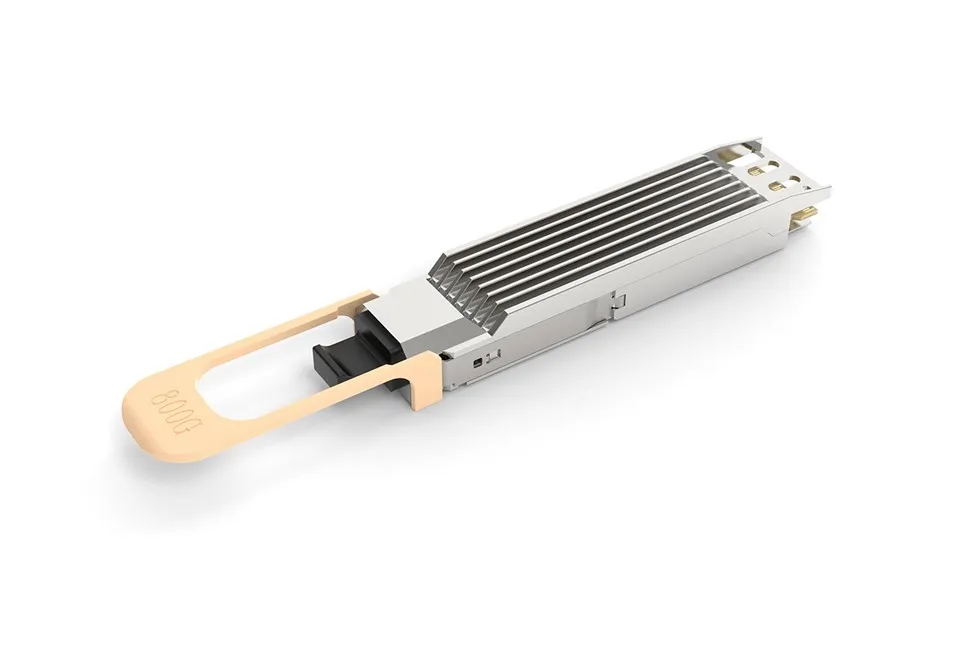
The 800G OSFP SR8 is a cutting - edge optical transceiver designed to meet the increasing bandwidth requirements of modern data centers. The "800G" indicates its high data rate of 800 gigabits per second, which is a significant leap forward compared to previous generations of transceivers. The "OSFP" stands for Octal Small Form - factor Pluggable, a form factor that offers high port density and excellent thermal performance. The "SR8" denotes that it is designed for short - reach applications, typically within a data center environment.
The 800G OSFP SR8 uses parallel optics technology, which means it has eight independent channels, each operating at a high speed. This parallel architecture allows for the aggregation of data across multiple channels, enabling the high - speed data transfer. It is compatible with multimode fiber (MMF), which is commonly used in data centers for short - distance connections.
Requirements of Financial Data Centers
Financial data centers have unique requirements that set them apart from other types of data centers. Firstly, they demand extremely low latency. In the financial world, even a millisecond of delay can result in significant financial losses. For example, in high - frequency trading, where algorithms execute trades in fractions of a second, any latency in data transmission can cause missed opportunities or incorrect trading decisions.
Secondly, high reliability is crucial. Financial transactions involve large amounts of money, and any system failure or data loss can have severe consequences. Therefore, the components used in financial data centers need to have a high mean time between failures (MTBF) and be able to withstand various environmental conditions.
Thirdly, scalability is important. As the financial industry grows and evolves, data centers need to be able to easily expand their capacity to handle increasing amounts of data and transactions.

Advantages of 800G OSFP SR8 in Financial Data Centers
Low Latency
The 800G OSFP SR8 is well - suited to meet the low - latency requirements of financial data centers. Its high - speed parallel optics technology allows for fast data transfer, reducing the time it takes for data to travel between different components in the data center. Additionally, the short - reach design means that the signal has a shorter distance to travel, further minimizing latency.
High Bandwidth
With a data rate of 800 gigabits per second, the 800G OSFP SR8 can handle large volumes of financial data, such as real - time market data feeds, trading orders, and risk management analytics. This high bandwidth ensures that financial institutions can process and analyze data in a timely manner, enabling them to make informed decisions quickly.
High Port Density
The OSFP form factor offers high port density, which is beneficial for financial data centers where space is often at a premium. By using 800G OSFP SR8 transceivers, data center operators can increase the number of connections in a given area, allowing for more efficient use of rack space and reducing the overall footprint of the data center.
Compatibility
The 800G OSFP SR8 is compatible with existing multimode fiber infrastructure commonly found in data centers. This means that financial institutions can upgrade their data centers to 800G without having to completely replace their fiber optic cabling, which can save a significant amount of time and money.
Comparison with Other 800G Transceivers
When considering 800G transceivers for financial data centers, another popular option is the QSFP DD 800. While both the 800G OSFP SR8 and QSFP DD 800 offer high - speed data transfer, there are some differences between them.
The OSFP form factor generally has better thermal performance compared to QSFP DD. In a financial data center where reliability is key, better thermal management can lead to a longer lifespan of the transceivers and fewer failures due to overheating.
In terms of port density, although both can achieve high port counts, the OSFP form factor may offer more flexibility in some cases, especially when it comes to future upgrades and expansion.
Potential Challenges
Cost
One of the potential challenges of using 800G OSFP SR8 in financial data centers is the cost. As a relatively new and high - end technology, the initial investment in 800G OSFP SR8 transceivers can be significant. However, it is important to consider the long - term benefits, such as increased efficiency, reduced latency, and scalability. Over time, the cost may be offset by the improved performance and the ability to handle more transactions.
Compatibility with Existing Systems
While the 800G OSFP SR8 is compatible with multimode fiber, there may be some compatibility issues with other components in the data center, such as switches and routers. Financial institutions need to ensure that their existing systems can support the high - speed data transfer of the 800G OSFP SR8. This may require some upgrades or modifications to the network infrastructure.
Conclusion
In conclusion, the 800G OSFP SR8 has great potential for use in financial data centers. Its low latency, high bandwidth, high port density, and compatibility with existing fiber infrastructure make it an attractive option for financial institutions looking to upgrade their data centers. While there are some challenges, such as cost and compatibility, the long - term benefits outweigh the initial hurdles.
If you are a financial institution interested in exploring the use of 800G OSFP SR8 in your data center, I encourage you to reach out to us. Our team of experts can provide you with more detailed information, conduct a feasibility study, and assist you in the procurement process. We are committed to helping you achieve the best performance and efficiency in your financial data center.
References
- "Optical Transceivers for Data Centers: A Technical Overview" - Industry White Paper
- "The Future of High - Speed Data Transmission in Financial Services" - Financial Technology Research Report
- "Comparative Analysis of 800G Transceiver Form Factors" - Telecommunications Journal